Skip to content
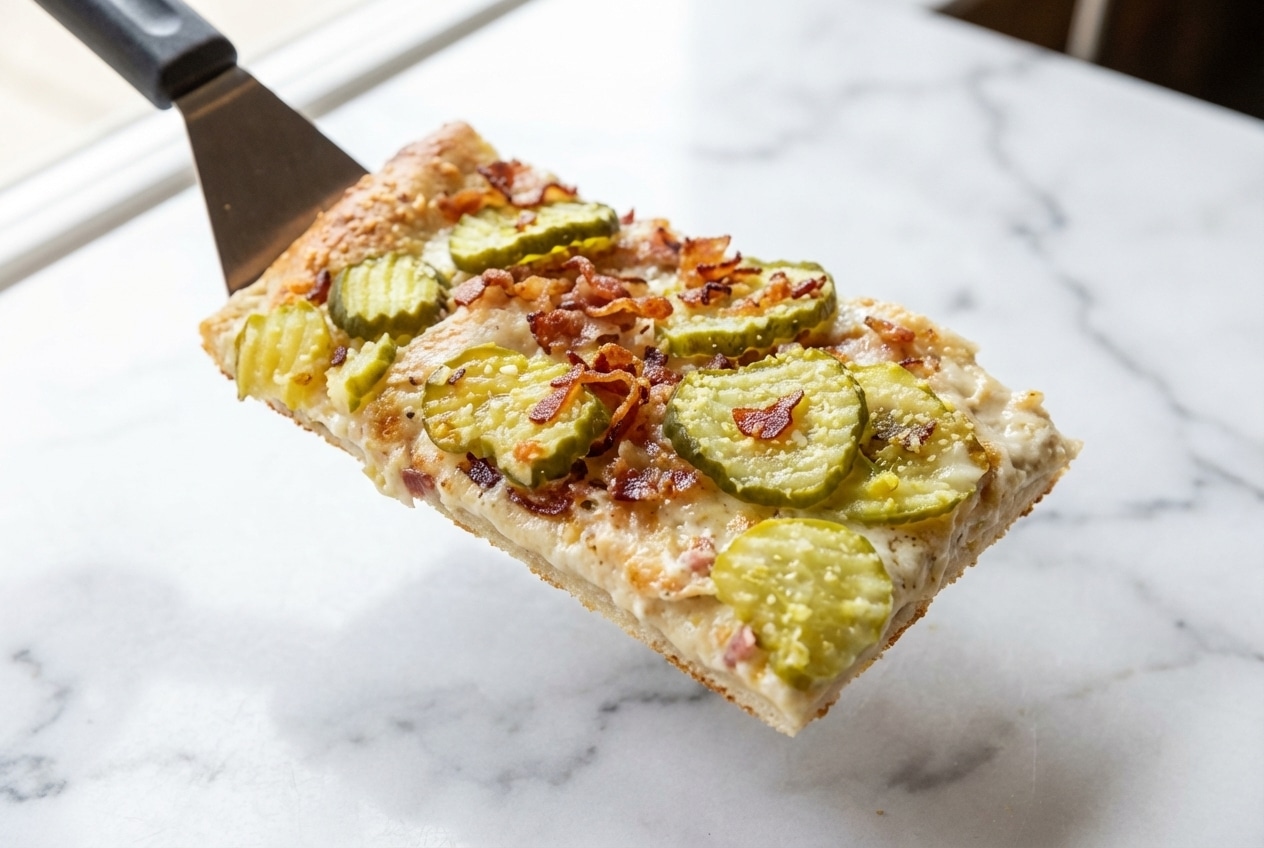
Pickle pizza had no business being this good, and yet, the first time I pulled one out of my oven, I understood why it went viral. That briny snap against creamy cheese is pure late-night magic, the kind that makes everyone hover around the cutting board.
This pickle pizza recipe is my “Triple Dill” version, built for people who love big flavor and a crisp bite. It’s rich, garlicky, and tangy, with a crunch finish that keeps it from drifting into soggy territory.
Why You’ll Love This Recipe
The “Triple Dill” punch: In my kitchen, stirring 1 tablespoon of Dill pickle brine into the Garlic cream sauce turned “pickle on pizza” into a real, layered flavor, then I finish with crushed Kettle-cooked chips for loud crunch.
Rich meets sharp, on purpose: The acidity of the brine slices right through the melted cheese, and that balance keeps every bite bright instead of heavy, especially when you bake hot for a deeper Maillard reaction.
Fast, flexible, and party-proof: It bakes quickly, it forgives swaps, and you can keep it meaty with bacon or go vegetarian without losing the whole point, which is creamy, briny, and crispy all at once.
Ingredients and Substitutions

These are simple grocery-store staples, but the order and moisture control matter. Keep the pickles thin, the cheese balanced, and the toppings light so the crust stays crisp.
Ingredients
- 1 cup of homemade garlic cream sauce or the pizza sauce of your choice
- Pizza crust/dough (can be store-bought pizza dough)
- ⅓ cup sharp cheddar cheese, shredded
- ⅔ cup fresh mozzarella pizza cheese, shredded
- 1 cup thinly sliced dill pickles
- 1 cup chopped bacon (optional)
- 2 tbsp chopped fresh dill
- 1 tbsp olive oil
- ¼ cup ranch dressing (optional)
- 2 tbsp grated Romano or parmesan cheese
Ingredient Notes & Substitutions
Pickles (brand and crunch): I get the best “high-heat” bite from Claussen or Grillo’s, because they stay snappy when the cheese goes bubbly. If you only have pre-sliced pickles, choose the thinnest ones and dry them like you mean it.
Garlic cream sauce: A white base plays nicer with briny toppings, because it cushions acidity instead of stacking more acid like red sauce would. If you want a protein-boosted twist, a creamy alfredo sauce can work beautifully with dill.
Cheese blend: Low-moisture mozzarella keeps things from turning watery, while cheddar brings sharpness that loves pickles. For a nuttier melt, Havarti or Gruyère can step in, but keep the overall amount controlled so the toppings don’t “swim.”
Bacon (optional): Bacon adds smoky salt that makes the pickles taste even brighter. If you skip it, a handful of red onion or spinach gives you that savory edge without the meat.
Dill: Fresh dill hits with a green, lemony perfume right at the end of the bake. Dried dill weed can help on the crust, but fresh on top tastes like the real deal.
How to Make pickle pizza recipe
Heat and prep the crust
- Preheat oven to 500° F, and give it time to fully heat.
- Drizzle pizza dough with olive oil, then spread it to your shape so it stays even.
Sauce and layering (the moisture-smart way)
- Cover pizza dough with the garlic cream sauce.
- Top with the cheese blend, followed by pickles & bacon.
My one non-negotiable here is drying the pickles well. Press the slices between paper towels until they stop glistening, because that extra brine is the fastest path to a soft crust.
Bake until bubbly and golden
Sprinkle dill on top of the pizza, and bake on the bottom or middle rack of the oven, switching to the top rack after about 7 minutes.
Cook for 10-15 minutes, or until the cheese becomes golden brown and starts to bubble.
Finish and serve
- Serve with ranch dressing, grated cheese, and more dill.
- Enjoy your tasty pickle pizza!
For the “Triple Dill” crunch, I top it immediately with crushed kettle-cooked dill pickle chips while the cheese is still molten, so they cling instead of falling off.
Secrets for a Perfectly Crispy Crust

Soggy pickle pizza almost always comes down to moisture, not your oven. Pickles carry a lot of liquid, and when that brine hits high heat, it steams upward into the cheese and softens the crust.
Drying the slices thoroughly fixes most of it, and baking at 500°F finishes the job by driving off surface water fast. The fan in a convection oven helps even more, and the science behind convection oven moisture removal explains why it crisps so efficiently.
A Pizza stone or steel matters if you want pizzeria-level snap. A stone gives a steady, even bake, while a steel transfers heat faster for more aggressive browning, especially if you launch with a pizza peel.
Keep your sauce-to-crust ratio modest. When there’s too much sauce, the cheese and pickles skate around, and you end up with topping slide and a pale center.
Pro Tips & Troubleshooting
Pro Tips
- Let the dough sit at room temperature for 30-60 minutes so it stretches without snapping back.
- Pat pickle slices extremely dry with paper towels to protect the crust.
- Use low-moisture mozzarella to keep the bake tighter and less watery.
- Brush the outer crust with olive oil, garlic powder, and dried dill for a garlic-bread edge.
- Keep toppings light so the center bakes through at 500°F.
Cheese behavior is more technical than most people think, and the baking properties of low-moisture mozzarella help explain the better browning and melt.
Common Mistakes to Avoid
- Using Bread and Butter pickles, the sweetness fights the garlic and cheese.
- Putting cold dough straight from the fridge into the oven, it bakes dense and won’t crisp.
- Slicing pickles too thick, which makes the bite harsh and the texture floppy.
- Over-saucing, which encourages sogginess and topping slide.
If you’re the kind of eater who already loves dill with savory “junk food” flavors, my Big Mac tacos scratch that same salty-tangy itch. The pickle-to-beef combo is a classic for a reason, and it’s a fun contrast to this creamy pizza.
Serving & Storage

Serving Ideas
I like this pizza hottest in the first 5 minutes, when the crust crackles and the dill smells like a garden. A crisp Sauvignon Blanc or a light pilsner cleans up the richness and makes the brine pop.
A cold, crunchy side keeps the meal from feeling too heavy, and an Asian cucumber salad is especially good here. The tang and sesame notes play nicely with dill and garlic.
For a sweet-heat finish, a drizzle of Mike’s Hot Honey is shockingly good. The key is using just enough to perfume the slice, not soak it.
Storage & Reheating
Refrigerate leftovers in a sealed container, and expect the pickles to soften a bit overnight. For best texture, I separate slices with parchment so the cheese doesn’t glue everything together.
Freezing: Freeze slices on a sheet first, then wrap individually once firm, so they don’t stick and the pickles stay as intact as possible. Thaw in the fridge, not on the counter, so condensation doesn’t wet the crust.
Reheating: An air fryer at 400°F for 3 minutes brings back the crisp edge and keeps the pickles from going rubbery. If you use an oven, go hot and use a preheated pan or stone to re-crisp the bottom.

Pickle Pizza Recipe

Equipment
- Oven
- Baking sheet or pizza stone/steel
- Paper towels
Ingredients
- 1 cup homemade garlic cream sauce or the pizza sauce of your choice
- pizza crust/dough can be store-bought pizza dough
- 1/3 cup sharp cheddar cheese shredded
- 2/3 cup fresh mozzarella pizza cheese shredded
- 1 cup dill pickles thinly sliced
- 1 cup bacon chopped, optional
- 2 tablespoons fresh dill chopped
- 1 tablespoon olive oil
- 1/4 cup ranch dressing optional
- 2 tablespoons Romano or parmesan cheese grated
- kettle-cooked dill pickle chips crushed, for the “Triple Dill” crunch finish
Instructions
Heat and prep the crust
- Preheat the oven to 500°F and give it time to fully heat.
- Drizzle the pizza dough with olive oil, then spread it to your shape so it stays even.
Sauce and layering (the moisture-smart way)
- Cover the pizza dough with the garlic cream sauce.
- Pat the pickle slices very dry between paper towels until they stop glistening.
- Top with the cheese blend, followed by the pickles and bacon (if using).
Bake until bubbly and golden
- Sprinkle dill on top of the pizza, and bake on the bottom or middle rack, switching to the top rack after about 7 minutes.
- Bake for 10–15 minutes total, or until the cheese becomes golden brown and starts to bubble.
Finish and serve
- Immediately top with crushed kettle-cooked dill pickle chips while the cheese is still molten so they cling.
- Serve with ranch dressing, grated cheese, and more dill, if you like.
- Enjoy your tasty pickle pizza.
Notes
Nutrition
Conclusion
This is the pickle pizza I make when I want people to stop mid-sentence and ask, “What is on this?” The Triple Dill idea, brine in the sauce plus dill on top plus crunchy chips at the end, turns a quirky trend into a genuinely craveable pie.
If you tweak it, keep one promise to yourself: control moisture and bake it hot. Once you nail that, you can riff endlessly, from spicy honey to extra cheese blends, and still get that briny, garlicky, creamy, crunchy bite.
Frequently Asked Questions
Why use white sauce instead of tomato sauce for pickle pizza?
Pickles are already highly acidic, so tomato sauce can push the whole pizza into sour. A garlic cream sauce adds fat and softness, which makes the brine taste bright instead of harsh.
How do I prevent my pickle pizza from becoming watery?
Slice the pickles thin and pat them very dry between paper towels before topping. That quick drying step removes brine that would otherwise steam out during baking and soften the crust.
What kind of pickles should I use?
Dill or Kosher Dill is the move for this flavor profile. Sweet pickles, especially Bread and Butter, tend to clash with garlic, cheese, and bacon.
Is pickle pizza actually good or just a trend?
When it’s done right, it’s genuinely delicious, briny, garlicky, creamy, and crunchy. The key is balancing acidity with a rich sauce and finishing with a crisp topping so the texture stays exciting.
Can I make this on a gluten-free crust?
Yes, just bake it hot and keep toppings light because many gluten-free crusts brown faster. A sturdy base like cottage cheese flatbread can also be a great alternative when you want a quicker, high-protein option.
Can I use a regular jar of pre-sliced pickles?
You can, and it’s convenient for weeknights. Choose thin slices, then dry them thoroughly so you don’t flood the cheese with extra brine.
Will the pickles get soggy when heated in the oven?
They soften a little, but they don’t have to turn limp. Drying them well, baking at 500°F, and adding a crunchy dill pickle chip finish keeps the overall bite crisp.
What does lacto-fermentation have to do with pickles?
Many traditional dill pickles get their tang from fermentation, which builds complex sour flavor over time. The process of lacto-fermentation explains why that brine tastes so deep and savory.