Skip to content
In my kitchen, a veggie platter is never an afterthought, it is the first thing people hover over while the music is still warming up. I learned the hard way that “pretty” means nothing if the carrots go limp and the cucumbers look tired before the second round of drinks.
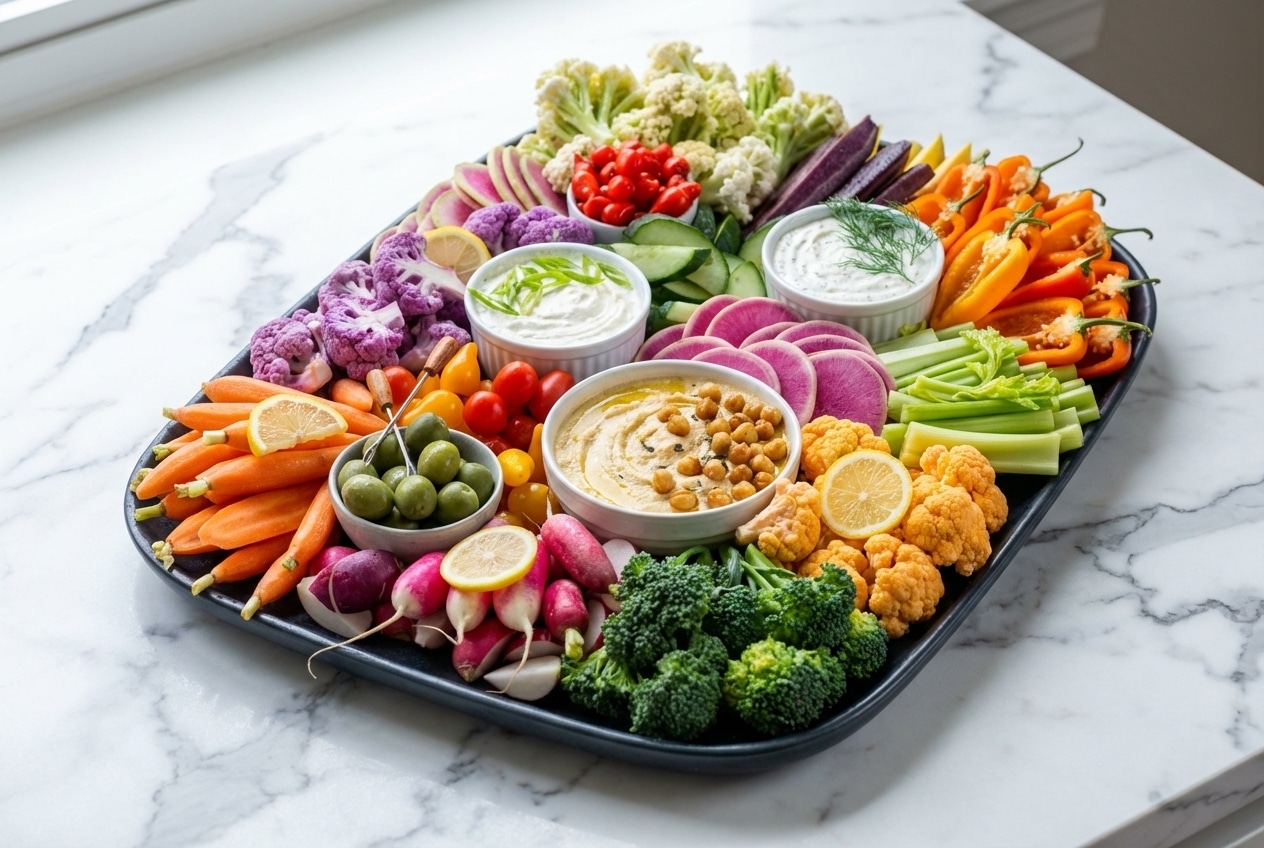
This is my go-to veggie platter for US-style parties, built like professional crudités and designed to stay snappy. The whole point is color, crunch, and that easy, healthy grazing vibe that makes hosting feel effortless.
Why You’ll Love This Recipe
The ultimate crunch factor: In my kitchen, the 20-minute lemon ice bath is the difference between “fine” and truly snappy crudités, the kind that crackle when you bite.
Looks like a pro made it: A little color blocking and smart “anchor” bowls turns a simple vegetable tray into a charcuterie board-level moment.
Works for almost everyone: This spread is naturally plant-based and gluten-free, and it brings fiber and antioxidants without feeling like diet food.
Make-ahead confidence: I will show you how to prep ahead without wilting, so the platter still looks bright when guests arrive.
Ingredients and Substitutions

Think of this as a build-your-own board: crisp vegetables, creamy dips, and a few salty, crunchy extras to make every bite feel complete.
Ingredients
Produce:
- Les Petit Carrots of Many Colors (from Trader Joe’s)
- Purple, Orange & White Cauliflower cut into florets and blanched (more on blanching in my St. Paddy’s Day Board post)
- Watermelon Radish sliced
- Cucumber sliced
- Mini Bell Peppers halved
- Mini Heirloom Tomatoes
- Sweety drop peppers
- Broccolini
- Celery
Carbs:
- Pita Chips
Accoutrement:
- Castelvetrano Olives
- Pistachios
Dips:
- Hummus
- Ranch
- Dill (I like Galbani)
Garnish:
- Dill
- Chives
- Parsley
- Roasted chickpeas
Ingredient Notes & Substitutions
Heirloom vegetables: Watermelon radish and mini heirloom tomatoes are my “cheat code” for visual impact, those jewel tones make the platter look expensive even when the rest is simple.
Mini Bell Peppers halved: If you cannot find minis, standard bell peppers cut into batonnet strips dip beautifully and feel just as party-friendly.
Purple, Orange & White Cauliflower cut into florets and blanched (more on blanching in my St. Paddy’s Day Board post): That quick blanch is not fussy, it is what keeps the florets bright and pleasant to chew instead of raw and chalky.
Dips: Hummus brings protein and body, ranch and dill bring that classic American party comfort, and mixing all three gives every guest a “favorite” without extra work.
How to Make veggie platter
Set your anchors first
Spoon the hummus, ranch, and dill into small bowls, then add olives and sweety drops into their own bowls too. Park those bowls right in the center of your board so everything else has structure, like little cornerstones that keep the platter from looking scattered.
Build the center with clean lines
- Fan the cucumber slices and watermelon radish slices into the open spaces between the dip bowls, keeping the patterns tight so the center looks intentional, not messy.
- From that center, add the mini heirloom tomatoes in separate piles so the colors read clearly, like little “blocks” of red and yellow that pop.
Finish the perimeter, then garnish like you mean it
- Ring the outside with cauliflower, broccolini, extra radish, carrots, celery, and peppers, separating similar colors so the whole board looks bright and organized.
- Dress the dips at the end: dill on the dill dip, chives on the ranch, and thyme plus roasted chickpeas on the hummus, then keep pita chips and pistachios on the side so they stay crisp.
The Secret to Restaurant-Quality Results

The real “restaurant crunch” comes from turgor pressure, which is just plant cells filling up with water until they get rigid. When I soak cut carrots, celery, radishes, and peppers in icy water with lemon slices for 20 minutes, they come out plumper, colder, and noticeably snappier on the platter.
For a party of 10, I plan about 1 to 1.5 cups of vegetables per person, especially if this veggie platter is the main appetizer. If it is one of many snacks, I lean closer to 1 cup and add more pita chips and pistachios for fullness.
If you want maximum color on the brassicas, blanching matters. The timing and purpose of blanching in boiling water is explained clearly by food preservation experts.
Dairy-based dips live by the 2-hour rule once they are out. Outdoors, I nest the dip bowls inside a larger bowl of ice to keep everything safely chilled and still scoopable.
My favorite low-waste habit is saving celery ends and carrot peels for stock. A freezer bag of clean veggie scraps turns into homemade broth on a cozy weeknight.
Sometimes I like a warm dip alongside the cold crudités. A small bowl of cottage cheese queso adds a high-protein option without changing the board’s vibe.
Pro Tips & Troubleshooting
Pro Tips
- Cut everything into “dunkable” batonnet-style strips so the vegetables grip dip without snapping.
- Keep your piles tight and abundant, negative space makes a platter look sparse.
- If prepping hours ahead, cover the arranged vegetables with a damp paper towel, then wrap the whole board to hold moisture.
- Use small bowls as anchors first, then build vegetables outward like petals.
Common Mistakes to Avoid
- Leaving cauliflower or broccolini pieces too large, guests want bite-sized and polite.
- Parking cucumbers next to broccoli, similar tones make the board look dull.
- Letting watery tomatoes touch pita chips, the chips will soften fast.
That damp-towel method also helps prevent the vegetables from oxidizing when you prep early. It is a simple humidity trick that keeps cut produce looking freshly sliced.
Serving & Storage
Serving Ideas
I love serving this with a crisp Sauvignon Blanc, or a botanical sparkling water with citrus. The bright acidity makes the vegetables taste sweeter and the dips feel lighter.
Roasted chickpeas and pistachios are not just garnish, they are texture. That salty crunch is what makes the creamy hummus and ranch feel even more satisfying.
If you are building a more vegetable-forward spread, a crunchy red cabbage slaw fits right in and holds well on a buffet. It also brings a bold color that plays nicely with the heirloom vegetables.
Storage and Make-Ahead Advice
Leftover vegetables keep best in airtight containers in the fridge. If they start to lose their snap, a quick ice bath brings them back to life.
Do not store pre-cut cucumbers in water, they turn slimy fast. Keep them dry with a paper towel in the container to absorb moisture.
The Art of the Modern Platter

A modern platter is half flavor and half choreography: anchors in the middle, color blocking around them, and plenty of height so it looks abundant. Those same visual rules work beautifully on a charcuterie board when you want something a little more indulgent.
When you give the veggies their ice bath and keep similar colors apart, you do not just serve vegetables, you serve a moment. People feel taken care of, and you look like the host who has it all handled.
The 20-minute lemon soak is the tiny step that changes everything, crunch, freshness, and that clean, cold bite that keeps guests coming back. Play with the colors, keep the piles tidy, and do not be shy with the garnishes.

Vibrant Party Veggie Platter

Equipment
- Large serving board or platter
- Small dipping bowls
- Mixing bowl for ice bath
Ingredients
Produce
- Les Petit Carrots of Many Colors (from Trader Joe’s)
- Purple, Orange & White Cauliflower cut into florets and blanched
- Watermelon Radish sliced
- Cucumber sliced
- Mini Bell Peppers halved
- Mini Heirloom Tomatoes
- Sweety drop peppers
- Broccolini
- Celery
Carbs
- Pita Chips
Accoutrement
- Castelvetrano Olives
- Pistachios
Dips
- Hummus
- Ranch
- Dill (I like Galbani)
Garnish
- Dill
- Chives
- Parsley
- Roasted chickpeas
Instructions
Set your anchors first
- Spoon the hummus, ranch, and dill into small individual bowls. Place the olives and sweety drop peppers into their own small bowls as well.
- Arrange these bowls right in the center of your platter to serve as the structural anchor for the rest of the ingredients.
Build the center with clean lines
- Fan the cucumber slices and sliced watermelon radish into the open spaces between the dip bowls, maintaining tight patterns for an intentional look.
- Place the mini heirloom tomatoes in distinct color blocks of red and yellow to create vibrant visual pops near the center.
Finish the perimeter, then garnish like you mean it
- Ring the outer edge of the board with the blanched cauliflower, broccolini, carrots, celery, and peppers, ensuring similar colors are kept apart for maximum contrast.
- Top the dill dip with fresh dill, the ranch with chives, and the hummus with thyme and roasted chickpeas. Place the pita chips and pistachios on the side to maintain their crispness.
Notes
Nutrition
Frequently Asked Questions
How do I prevent my vegetables from drying out on the tray?
Keep the platter tightly covered with a damp paper towel and plastic wrap until serving time. For maximum crunch, give the cut vegetables a 20-minute ice bath right before you assemble.
Which vegetables should be blanched vs. served raw?
Broccolini and cauliflower benefit from a quick 60-second blanch and an ice shock for better color and a gentler bite. Peppers, cucumbers, radishes, and tomatoes are best served raw for that fresh, crisp snap.
How much dip do I need per guest?
Plan on about 1/4 cup of dip per person total. If you serve hummus plus ranch plus dill, you can split that amount across the three bowls.
How long can a veggie platter sit out?
For food safety, dairy-based dips like ranch and dill should not sit out longer than 2 hours. If it is warm outside, keeping the dip bowls nested in ice helps everything stay safely chilled.
Can I make a vegetable tray the night before?
You can prep the vegetables a day ahead and store them properly, then assemble closer to serving for the best look. Extra cucumbers are great turned into a quick cucumber salad so nothing goes to waste.