Skip to content
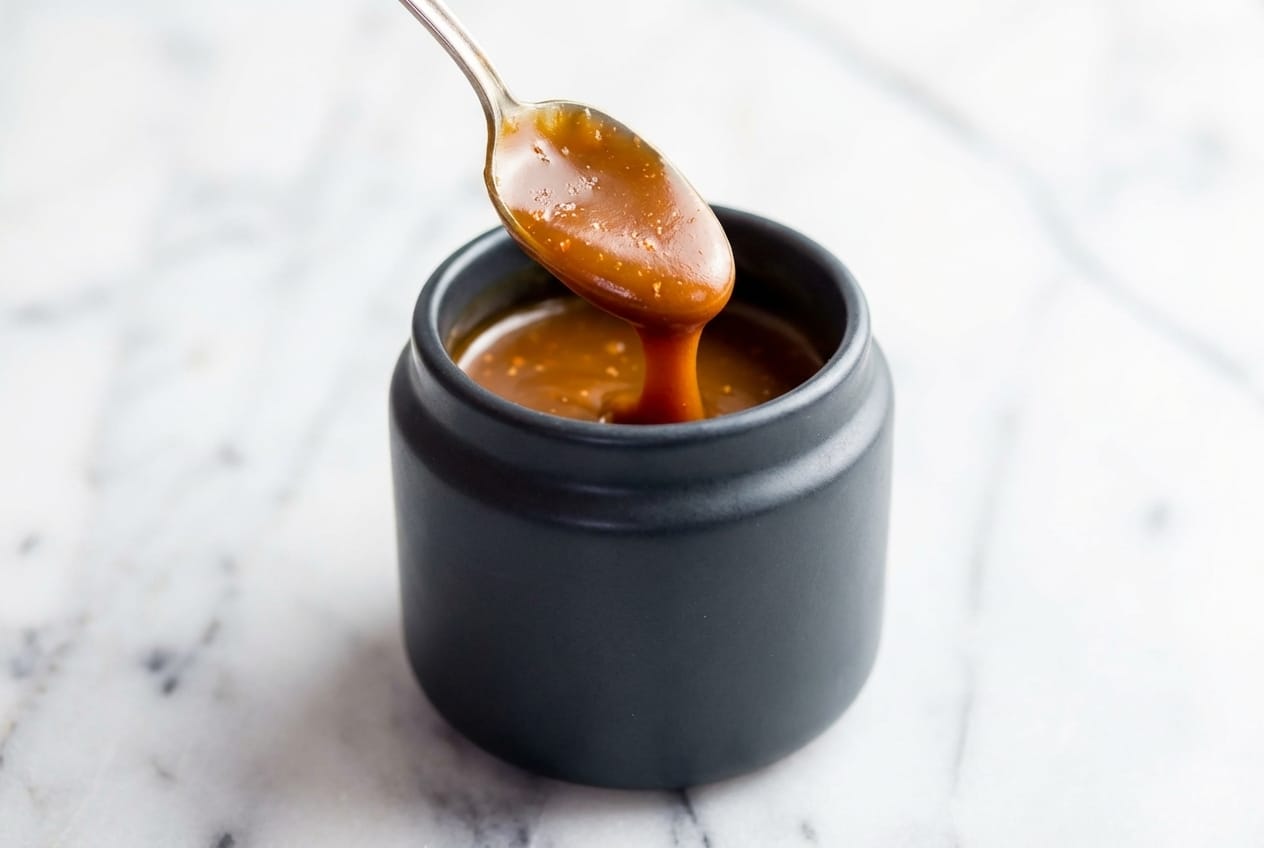
In my kitchen, salted caramel always feels like pure American comfort, that warm, buttery drizzle that turns a plain scoop of vanilla into a Sunday-night sundae worth lingering over. I still remember spooning it over apple crisp and watching it disappear faster than the ice cream melted.
This homemade salted caramel sauce is my go-to pantry staple when I want bakery-level flavor without leaving the house. The little chef’s trick here is browned butter, it adds a toasted depth that makes the sauce taste less “just sweet” and more like liquid gold.
Why You’ll Love This Recipe
Brown butter magic: By browning the unsalted butter first, I get a beurre noisette aroma that turns simple caramelization into something nutty and complex, the kind of flavor that makes people ask what your “secret” is.
Velvety, glossy texture: When the hot sugar and cream emulsify correctly, the sauce goes from foamy chaos to a smooth sheen that coats the back of a spoon like satin.
Gourmet depth, not flat sweetness: This method leans into the Maillard reaction from the dairy and the amber stage of sugar, so the sweetness tastes rounded and grown-up.
Fits everything: I’ve poured this over coffee, tucked it between cake layers, and spooned it onto brownies, it plays nicely with almost any dessert mood.
Ingredients and Substitutions

You only need a handful of staples, but each one has a job to do. Sugar builds the caramel base, cream brings richness, and flaky salt gives that final pop that keeps it from tasting one-note.
Ingredients
- 1 cup (199g) granulated sugar
- 1/2 cup (113ml) water
- 1/2 cup (113g) unsalted butter
- 1/2 cup (113ml) heavy cream
- 1 tablespoon pure vanilla extract
- 1 teaspoon flaky sea salt
Ingredient Notes & Substitutions
Flaky sea salt: Flaky salt, like Maldon sea salt or fleur de sel, melts unevenly in the best way, so you get tiny bursts instead of an overall salty sauce.
Heavy cream: Stick with heavy whipping cream for the right fat content and a stable emulsion, thinner dairy can make the sauce feel weak and more likely to separate.
Unsalted butter: I always choose unsalted butter so I can control the salt level precisely, especially because different brands vary wildly in sodium and water content.
Vanilla extract: Pure vanilla extract gives a round finish, and if you ever want a deeper flavor, vanilla bean paste can be swapped in at the same moment as the vanilla.
Easy variations: For bourbon salted caramel, replace the vanilla extract with 1 to 2 tablespoons of good bourbon. For espresso caramel, whisk in a teaspoon of espresso powder with the salt. For a dairy-free version, full-fat canned coconut milk and vegan buttery sticks can work, but the flavor will shift toward coconut.
How to Make homemade salted caramel sauce
Build the sugar base
- Set a medium saucepan with tall sides on the stove, then whisk together the granulated sugar and water until everything looks like wet sand melting into a cloudy syrup. Keep the sides of the pan clean and tidy, because stray sugar crystals are where crystallization loves to start.
- Cook over medium-low heat for about 3 to 5 minutes, sometimes a touch longer depending on your stove, until the sugar is fully dissolved. You’ll know it’s ready when the liquid looks clear and smooth, and you can’t see any grains pooling at the bottom.
Brown the butter, then reach the amber stage
- While the sugar dissolves, brown the butter in a separate small pan, letting it melt and quietly foam until the milk solids turn toasty and golden. When it smells nutty like toasted hazelnuts, pull it off the heat so it doesn’t tip into burnt.
- Once the sugar mixture is dissolved, add the browned butter to the saucepan, then bring everything to a slow boil over medium heat. From here on, resist stirring, let the bubbles do the work while you gently swirl the pan if needed.
- Continue cooking until the color shifts to deep golden brown with a copper tint, the classic amber stage, about 12 minutes, sometimes longer depending on your stove. The aroma should smell warm and caramel-like, not sharp or acrid.
Finish with cream, vanilla, and salt
- As soon as you hit that copper color, remove the pan from heat and immediately add the heavy cream. It will hiss, roar, and bubble up aggressively for a moment, so those tall sides are your best friend here.
- Stir in the vanilla and flaky sea salt, then whisk vigorously until the sauce turns glossy and completely smooth. Set it aside to cool, it will thicken into that perfect spoonable pour as it rests.
Secrets for Gourmet Results

Caramel has a tiny window where it tastes bold but not bitter, and for technical bakers that sweet spot is roughly 320°F to 350°F. The official temperature stages of sugar help you match color to numbers.
What makes this sauce taste “gourmet” is chemistry, not luck, caramelization builds bittersweet depth, and the Maillard reaction adds toasted complexity once dairy enters. The chemical transformation of sugar explains why overheated syrup turns harsh.
Swirling the pan is my quiet little habit that saves batches. Gentle swirling keeps the syrup moving without encouraging crystals to climb and trigger crystallization, which is what causes that gritty, grainy mouthfeel.
I also avoid dark nonstick pans for caramel, because you can’t judge color well. A light stainless pan makes it easy to see the moment the syrup turns copper instead of burned.
Building a “sauce pantry” is one of the most satisfying kitchen upgrades. Mastering caramelization feels as rewarding as keeping hot honey on hand for quick flavor.
Pro Tips & Troubleshooting
Pro Tips
- Use room temperature cream and butter to reduce seizing and clumping when dairy hits hot sugar.
- Choose a high-sided saucepan, the mixture can triple in volume when you add cream.
- Once boiling begins, swirl the pan instead of stirring to prevent crystallization on the sides.
- Use a heavy-bottomed stainless steel pan so you can clearly track the amber stage color shift.
Common Mistakes to Avoid
- Stirring during the boiling stage, it can seed crystals and turn your sauce grainy.
- Using a thin-bottomed pot, hot spots can scorch the sugar before it caramelizes evenly.
- Adding cold cream to hot caramel, the temperature shock can form rock-hard clumps.
How to Fix Seized Caramel
If your caramel tightens up into clumps after adding cream, don’t panic, I’ve rescued plenty of batches. Set the pan back over very low heat, add a small splash of warm cream, and whisk gently until the hard bits slowly melt back into a smooth sauce.
When you want the science-backed reason, the Iowa State Extension guidance on preventing sugar crystallization explains why gentle heat helps undo the seize.
Serving & Storage

Creative Serving Suggestions
- Drizzle over warm apple crisp or fudgy brownies for that sweet-salty contrast.
- Use as a “drip” on a chilled layer cake, it sets like a glossy curtain.
- Swirl into vanilla bean cheesecake batter before baking for caramel ribbons.
- Serve as a dip for tart Granny Smith apple slices when you want balance.
When I’m building a dessert for a crowd, a spoonful of caramel between creamy layers is pure magic. A silky ribbon in a strawberry trifle brings out the berries and rounds the sweetness.
This sauce is also a breakfast troublemaker in the best way. A warm drizzle over french toast tastes like a diner dessert disguised as brunch.
Storage and Food Safety
- Refrigeration: Store in a glass mason jar for up to 3 weeks.
- Room Temperature: It can sit out for a few hours for serving, but refrigerate it for long-term safety.
- Freezing: This sauce freezes well for up to 3 months, thaw in the fridge overnight.
The Ultimate Dessert Topping
Watching sugar and water turn from clear syrup into copper, then into a brown-butter masterpiece, never gets old in my kitchen. That toasted beurre noisette note is the small detail that makes this homemade salted caramel sauce taste like it came from a pastry case.
It’s the kind of sauce that invites play, a pinch more flaky salt, a bourbon swap, or a spoonful over something cold and chewy. I love it as a dip with mochi ice cream because the contrast is irresistible.

Homemade Salted Caramel Sauce

Equipment
- Medium high-sided saucepan
- Small pan
- whisk
- Glass mason jar
Ingredients
- 1 cup granulated sugar 199g
- 1/2 cup water 113ml
- 1/2 cup unsalted butter 113g
- 1/2 cup heavy cream 113ml
- 1 tablespoon pure vanilla extract
- 1 teaspoon flaky sea salt
Instructions
Build the sugar base
- Combine the granulated sugar and water in a medium saucepan with tall sides. Whisk together until the mixture resembles wet sand. Ensure the sides of the pan are clean to prevent crystallization.
- Cook over medium-low heat for 3 to 5 minutes until the sugar is completely dissolved. The syrup should appear clear and smooth with no visible grains.
Brown the butter then reach the amber stage
- In a separate small pan, melt the butter and allow it to foam until the milk solids turn golden and smell nutty like hazelnuts. Remove from heat immediately to avoid burning.
- Add the browned butter to the sugar saucepan and bring the mixture to a slow boil over medium heat. Do not stir, but you may gently swirl the pan if necessary.
- Continue cooking for about 12 minutes until the syrup reaches the amber stage, characterized by a deep golden copper color and a warm caramel aroma.
Finish with cream vanilla and salt
- Remove the pan from the heat and immediately pour in the heavy cream. Be prepared for the mixture to bubble up aggressively.
- Whisk in the vanilla extract and flaky sea salt vigorously until the sauce is glossy and smooth. Let it cool and thicken before serving.
Notes
Nutrition
Frequently Asked Questions
How do I fix grainy or crystallized caramel?
Graininess usually comes from crystallization, often triggered by stirring once the syrup boils or by sugar crystals on the pan sides. Rewarm the sauce over very low heat and whisk until smooth, and next time rely on gentle swirling instead of stirring.
What is the best type of salt to use for salted caramel?
Flaky sea salt is ideal because it gives little “pops” of seasoning, Maldon sea salt and fleur de sel are favorites. Table salt dissolves too evenly and can taste harsh if you overshoot.
Can I make this without a candy thermometer?
Yes, the copper-colored amber stage is your best cue. Focus on a deep golden brown color and a warm caramel aroma, then pull it from the heat before it smells sharp or smoky.
Why did my caramel sauce turn out bitter?
Bitterness almost always means the sugar cooked too far past the amber stage, typically beyond about 350°F. The fix is prevention, watch the color closely and remove it as soon as it turns copper.
How do I reheat caramel sauce without burning it?
Use gentle heat, either 15-second microwave bursts with stirring in between, or a double boiler so the jar warms gradually. If it’s too thick, a tiny splash of warm cream whisked in will loosen it.