Skip to content
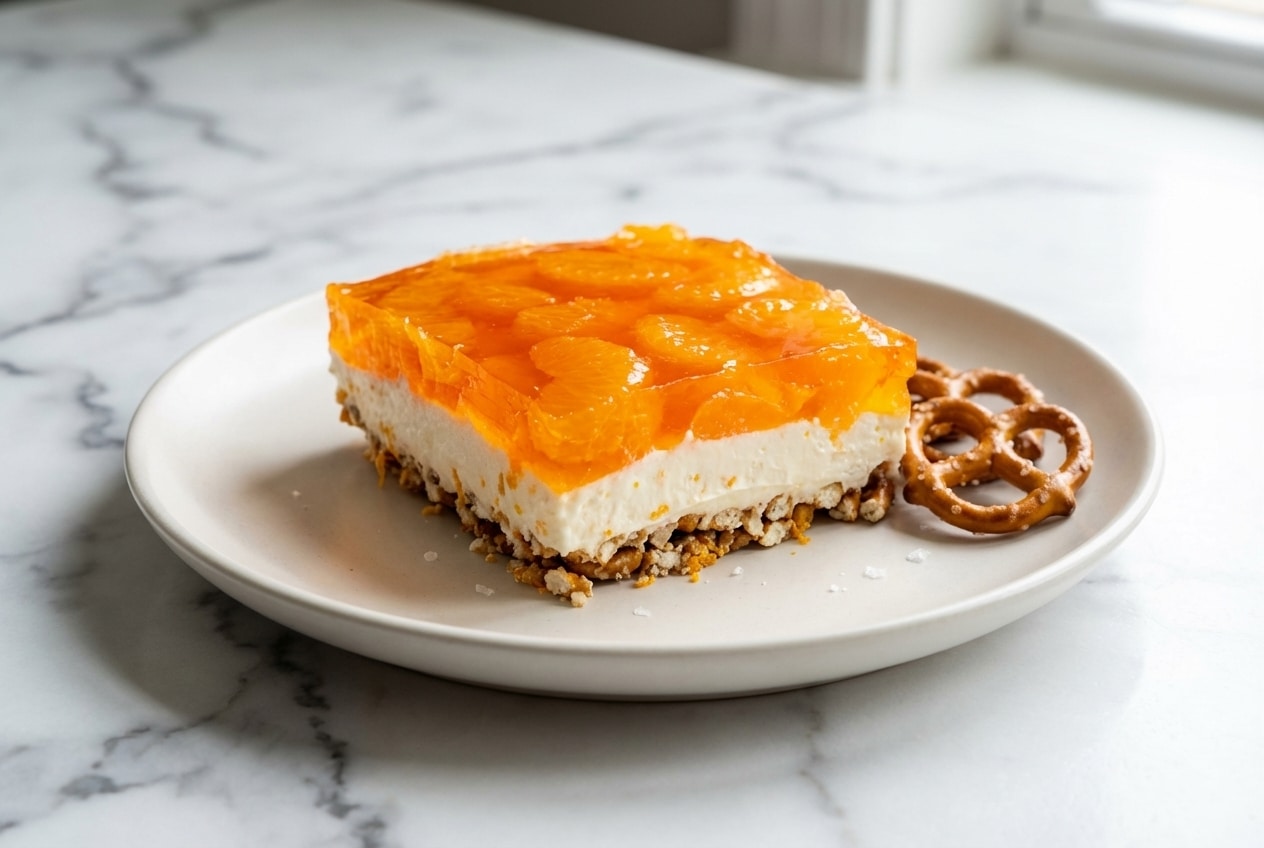
Every time I hear the crunch of pretzels under a spoon, I’m right back at those old-school family potlucks, paper plates, folding chairs, and that famous salty-sweet dessert everyone called “salad” with a wink. This orange pretzel parfait is my party-friendly upgrade, all the same comfort, but dressed up in individual glasses.
You get bright citrus, a creamy cloud of vanilla-scented filling, and a crust that stays snappy for hours. It’s the kind of dessert that looks elegant on a buffet, but tastes like home, only with a little extra sunshine.
Why You’ll Love This Recipe
The Double-Orange Punch: In my kitchen, orange juice concentrate in the gelatin gives a louder, brighter citrus pop than plain water, like a creamsicle flavor that actually tastes like orange.
Zesty Crust Upgrade: Fresh orange zest rubbed into warm butter perfumes the whole base, and that tiny pinch of Maldon sea salt makes the pretzels taste more “grown-up” without losing the fun.
Perfect for Entertaining: Parfait glasses mean no slicing, no messy scoops, and every guest gets those neat layers of pretzels, cream cheese, and mandarin oranges.
Scientific Balance: A little salt in a salty-sweet dessert nudges the fruit forward, and it makes the cream cheese filling taste even silkier.
Ingredients and Substitutions

These ingredients build three bold layers, crunchy pretzels, a fluffy cream cheese filling, and a bright orange gelatin top that sets cleanly and slices with a spoon.
Ingredients
Pretzel Crust:
- 2 cups crushed pretzels
- 3 Tablespoons granulated sugar
- ¾ cup butter
Cream Cheese Filling:
- 16 ounces cream cheese softened
- 1 cup granulated sugar
- 1 cup heavy whipping cream
- 2 teaspoons vanilla extract
Orange Jello Topping:
- 6 oz box orange gelatin
- 2 cups boiling water
- 1½ cups ice water
- 20 oz mandarin oranges (2 cans)
Ingredient Notes & Substitutions
Pretzels: Twists or sticks crush evenly and taste cleaner than heavily seasoned pretzels. I like a finer crumb for stability, but I leave a few sandy bits for extra crunch.
Butter: Melt it gently until just liquid, then stir immediately so every crumb gets coated. That buttery coverage is what helps the crust bake up crisp instead of dusty.
Cream cheese: Full-fat sets up best and gives that firm, spreadable “seal” layer. If it’s not fully softened, you’ll chase lumps forever and the filling won’t look silky.
Heavy whipping cream: Whipping it right into the bowl makes the filling light and fluffy, not dense. If you prefer a shortcut, 8 oz whipped topping can be folded in after the sugar and vanilla are mixed.
Mandarin oranges: Canned fruit is the safer bet for a clean set because it’s heat-treated, and it won’t fight the gelatin the way some fresh fruits can. The science behind enzyme differences explains why gelatin can fail with certain fresh fruit.
Double-orange twist: This article highlights swapping the ice water for chilled orange juice concentrate, but the ingredient list here stays classic. If you do the concentrate method, keep it cold and let the gelatin cool before pouring, so your layers stay sharp.
How to Make orange pretzel parfait
Prep the pretzel crust
- Heat the oven to 350°F, and keep your pan nearby so you can work while the butter is warm.
- In a 9×13 baking dish, combine the crushed pretzels and granulated sugar, then pour in the melted butter. Stir until every crumb looks glossy, like damp sand that holds together when you pinch it.
- Press the mixture firmly across the bottom, especially into the corners, then bake for 15 minutes. You’ll smell a toasty, buttery pretzel aroma when it’s ready.
- Set the pan aside and let the crust cool completely, it should feel room temperature before anything creamy touches it.
Whip the cream cheese “seal” layer
- Beat the softened cream cheese until it looks satiny and smooth, with no visible lumps clinging to the bowl.
- Add the granulated sugar and vanilla extract, then mix again until the texture looks like a thick, glossy frosting.
- With the mixer running, drizzle in the heavy whipping cream slowly, and keep whipping until the filling turns fluffy and holds its shape. It should look like soft clouds and form sturdy peaks.
- Spread the cream layer over the cooled crust, pushing it all the way to the edges to create an airtight seal. This edge-to-edge seal is what keeps the orange gelatin from sneaking down into the pretzels.
Layer the fruit and finish the orange gelatin topping
- Drain the mandarin oranges well, then arrange them evenly over the cream layer. Slide the pan into the refrigerator while you prepare the gelatin.
- Stir the orange gelatin into 2 cups boiling water until the liquid is completely clear and no granules remain. Add the ice water and stir until the mixture cools down, then let it sit until it reaches room temperature.
- Pour the cooled gelatin slowly over the oranges, aiming gently so you don’t disturb the cream layer. Refrigerate until set, at least a couple of hours, until the top feels firm and jiggly.
Secrets for the Ultimate Parfait

The science of the seal: That cream cheese layer isn’t only for flavor, it’s a moisture barrier. Cream cheese has specific structural properties that help it hold together, so it can protect the pretzels from the liquid gelatin.
Temperature control: The gelatin has a Goldilocks moment, not hot, not fully thick. When it’s room temperature and still pourable, you get clean layers and a clear top.
Fine crumbs vs. chunks: Big pretzel chunks create little tunnels, and tunnels invite leaks. A fine, even crumb presses into a tighter crust, which makes serving cleaner in parfait glasses or a 9×13 baking dish.
Pro Tips & Troubleshooting
Pro Tips
- Clear 9-oz cups or canning jars show off those bright layers like stained glass.
- A kitchen scale helps keep the butter-to-pretzel balance consistent every time.
- Spread the cream layer right to the container’s edge, that border is your leak-proof gasket.
- Let the crust cool fully before topping, warm crust melts the filling.
- For ultra-neat layers, pour gelatin over the back of a spoon.
Common Mistakes to Avoid
- Soggy crust: Gelatin was poured too hot, or the cream cheese seal did not touch the sides.
- Cloudy gelatin: The pour hit the cream layer too hard and stirred it up, a spoon-buffer keeps it clear.
- Loose filling: Cream was added too fast, whip it in slowly so it aerates properly.
- Weeping fruit layer: Oranges were not drained well, give them time in a colander.
Serving & Storage

Elegant Serving Ideas
A whole pretzel twist on top makes the crunch promise obvious, and a mint leaf plus an orange zest curl makes it look catered. If your dessert table leans playful, the layered look of a strawberry brownie trifle fits right in too, and it gives guests a second glass-dessert option.
This orange pretzel parfait also shines next to savory party bites, because the sweet citrus cools the palate after salty snacks. A spread that includes charcuterie nachos feels festive and balanced, especially when you’re feeding a crowd that grazes.
Storage and Make-Ahead Advice
This dessert is at its crispiest within 24 hours, but it still eats well for up to 3 days in the fridge. Keep it cold, covered, and undisturbed, and the layers stay prettier longer.
For parties, I assemble the crust and cream layer first, then finish the gelatin once it’s cooled to room temperature. For cold holding basics, the official storage guidelines align with keeping chilled desserts properly refrigerated.
The Final Word on Orange Pretzel Parfaits
The best bite is all contrast, crunchy pretzels, velvety cream cheese, and that bright orange gelatin snap on top. If you love the classic potluck vibe but want a cleaner, prettier serve, the parfait format is the trick I reach for every time.
Play with your garnishes, keep that cream cheese seal tight, and let the gelatin cool before it meets the spoon. Once you’ve got the rhythm, you’ll start dreaming up your own layered flavors for the next get-together.

Refreshing Orange Pretzel Parfait

Equipment
- 9×13 baking dish
- Electric mixer
- Mixing bowls
Ingredients
Pretzel Crust
- 2 cups crushed pretzels
- 3 Tablespoons granulated sugar
- ¾ cup butter
Cream Cheese Filling
- 16 ounces cream cheese softened
- 1 cup granulated sugar
- 1 cup heavy whipping cream
- 2 teaspoons vanilla extract
Orange Jello Topping
- 6 oz box orange gelatin
- 2 cups boiling water
- 1½ cups ice water
- 20 oz mandarin oranges 2 cans
Instructions
Prep the pretzel crust
- Heat the oven to 350°F and prepare your baking dish.
- In a 9×13 baking dish, combine the crushed pretzels and granulated sugar, then pour in the melted butter. Stir until every crumb looks glossy, like damp sand that holds together when pinched.
- Press the mixture firmly across the bottom, especially into the corners, then bake for 15 minutes until you smell a toasty, buttery pretzel aroma.
- Set the pan aside and let the crust cool completely to room temperature before adding the filling.
Whip the cream cheese “seal” layer
- Beat the softened cream cheese until it looks satiny and smooth with no visible lumps.
- Add the granulated sugar and vanilla extract, then mix again until the texture looks like a thick, glossy frosting.
- With the mixer running, drizzle in the heavy whipping cream slowly and continue whipping until the filling turns fluffy and holds sturdy peaks.
- Spread the cream layer over the cooled crust, pushing it all the way to the edges to create an airtight seal to protect the pretzels from moisture.
Layer the fruit and finish the orange gelatin topping
- Drain the mandarin oranges well and arrange them evenly over the cream layer. Place the pan in the refrigerator.
- Stir the orange gelatin into 2 cups of boiling water until completely clear. Add the ice water and stir until cooled, then let it sit until it reaches room temperature.
- Pour the room-temperature gelatin slowly over the oranges. Refrigerate until set, at least 2 hours, until the top is firm and jiggly.
Notes
Nutrition
Frequently Asked Questions
Why did my pretzel crust turn out soggy?
Two culprits show up most often, the cream cheese layer did not reach the edges, or the orange gelatin was still warm when poured. The fix next time is pressing the filling firmly to the sides, then waiting until the gelatin is room temperature and calm, not steaming.
Can I substitute Cool Whip for the heavy cream?
Yes. Mix the cream cheese with the sugar first, then fold in 8 oz of whipped topping gently so you keep the filling airy. The flavor is a bit sweeter and less rich than heavy whipping cream, but it’s a reliable shortcut.
How long does it take for the orange gelatin to set?
Plan on 2 to 4 hours in the refrigerator for a firm set, depending on how cold your fridge runs and how deep the layer is. If you’re prepping multiple make-ahead sweets, a freezer-friendly option like mochi ice cream can be done even earlier without affecting texture.
Can I use sugar-free Jello and sweeteners?
Sugar-free orange gelatin generally sets fine, but the flavor can read a little sharper. Keep the cream cheese layer full and thick, and avoid pouring warm gelatin, because the “seal” matters even more when sweetness is reduced.
How do I assemble this in individual parfait cups?
Divide the crust mixture among clear cups, press down firmly, and bake at 350°F for 15 minutes, then cool completely. Pipe or spoon in the cream cheese layer all the way to the glass edge, add drained mandarin oranges, then pour room-temperature gelatin slowly and chill until set.
Can I use frozen oranges instead of canned mandarin oranges?
Frozen oranges thaw softer and can release extra liquid, which can muddy the gelatin. If you go that route, thaw completely, drain very well, and pat dry, but canned mandarin oranges are still the most consistent for a clean set.