Skip to content
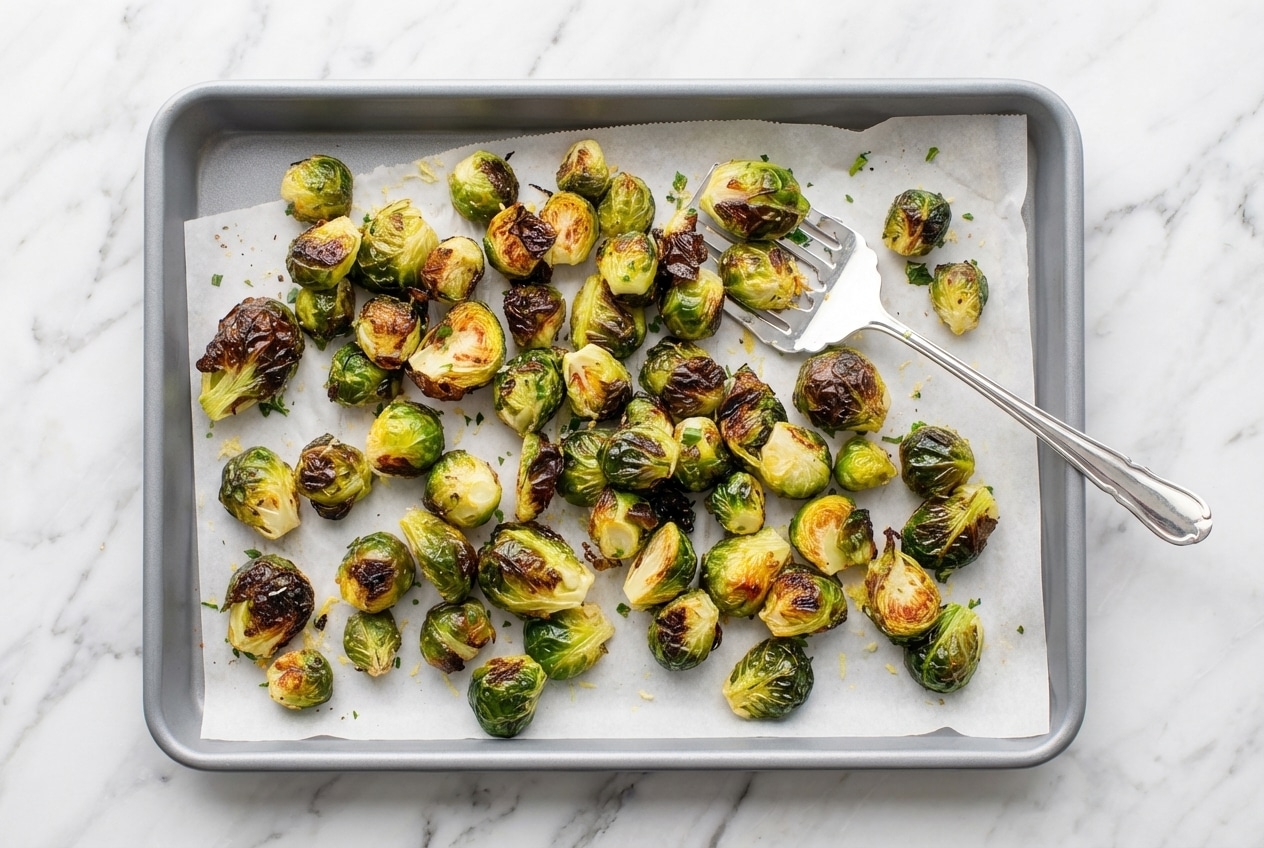
In my kitchen, roasted brussels sprouts are the quickest way to turn “just a vegetable” into something people hover over like it is a bowl of chips. The trick is chasing that deep caramelization without drifting into soggy, cabbagey territory.
This guide is for anyone who wants loud crunch, tender centers, and edges that go dark-golden and nutty in the best way. Whether you are cooking a weeknight side dish or building a holiday plate, this method keeps the sprouts crisp, confident, and never bitter.
Why You’ll Love This Recipe
The shatter-crisp secret: In my kitchen, a tiny dusting of cornstarch creates a delicate crust that crackles when you bite, even after you add lemon juice.
High-heat caramelization: Roasting hot on a sheet pan brings out sweetness fast, so you get that toasty, almost popcorn-like aroma instead of bitterness.
Weeknight simple, restaurant texture: A drizzle of extra virgin olive oil and the right spacing does most of the work, and the loose leaves turn into irresistible “sprout chips.”
Keto-friendly comfort: If you like cruciferous vegetables that eat like a snack, this fits right in, similar to these keto cabbage recipes that keep things satisfying and light.
Ingredients and Substitutions

You only need a few staples for crispy roasted brussels sprouts, then you can finish them simply with salt or dress them up with the bright, savory lemon Parmesan option.
Ingredients
- 1 pound Brussels sprouts, trimmed
- Extra-virgin olive oil, for drizzling
- Sea salt and freshly ground black pepper
Lemon Parmesan seasoning, optional:
- 1 tablespoon fresh lemon juice, plus 2 teaspoons zest
- 1 tablespoon grated Parmesan cheese, or ¼ cup shaved
- 1 tablespoon fresh thyme leaves
- Fresh parsley leaves, for garnish
- Pinch red pepper flakes
Ingredient Notes & Substitutions
Brussels sprouts: Look for tight, bright-green heads that feel heavy for their size. If some are huge, quarter them so everything finishes together, nobody likes a few burnt babies and a few undercooked giants.
Extra-virgin olive oil: A good bottle matters here because roasting leans on flavor concentration and caramelization. I drizzle enough to coat, not drown, so the sprouts roast instead of frying in puddles.
Sea salt and freshly ground black pepper: Salt early so it clings to the oil and seasons each cut face. Pepper can go before roasting, but I often add a final pinch at the end for a brighter bite.
Parmesan: The grated version melts into the hot sprouts, while shaved gives salty little pops. If you avoid dairy, nutritional yeast can mimic that savory umami feeling.
Lemon: The juice wakes everything up, but toss it while the sprouts are hot so it sizzles and clings. If you love extra zing, lean into the zest because it perfumes the whole bowl.
How to Make roasted brussels sprouts
Heat the oven and set up the pan
- Heat your oven to 425° so it is truly roaring hot. If you can, let your sheet pan preheat too, that first contact gives the sprouts an instant sear.
- Line a baking sheet with parchment paper if you prefer easier cleanup, especially if you are not preheating the pan. Either way, you want a wide, flat surface so steam can escape.
Trim, cut, and season
- Trim the ends and remove any tired outer leaves. Slice the Brussels sprouts in half from top to stem so each piece has a flat side for browning.
- Toss the sprouts with drizzles of extra-virgin olive oil, then add pinches of sea salt and freshly ground black pepper. They should look glossy, not slick, and smell fresh and green.
Roast until deeply golden
Spread the sprouts on the baking sheet in a single layer, giving them breathing room, then roast 20 to 30 minutes. They are ready when the centers feel tender, and the edges look dark golden brown with crisp, lacy bits.
Finish with lemon Parmesan, if you want the full sparkle
Toss the hot sprouts with the lemon juice, zest, Parmesan, and thyme leaves, then finish with fresh parsley and a pinch of red pepper flakes. The bowl should smell bright and nutty, with a little heat dancing at the end.
Secrets for Culinary Perfection

The big win with roasted brussels sprouts is understanding what high heat actually does. The Maillard reaction is what turns plain vegetables into browned, savory comfort.
That is why 400°F to 425°F is the sweet spot in real life, it pushes caramelization and keeps the sprouts from lingering in that steamy zone. Once you see those browned cut faces, you will smell it too, a toasted, nutty profile that signals flavor.
Bitterness usually comes from moisture and low heat, not from the sprouts being “bad.” The compounds behind those bitter sulfur smells act up when cruciferous vegetables are cooked gently or held hot too long.
Give them heat, space, and time to brown, and the sweetness shows up with far less funk.
Size matching is the quiet professional move. Small sprouts can stay whole, medium get halved, and large should be quartered so everything on the sheet pan hits tenderness at the same moment.
If you like the same science applied to another Brassica oleracea cousin, the technique carries right over to roasted cabbage steaks where high heat makes the edges sweet and crisp.
Moisture control is the crunch insurance policy. After washing, dry the sprouts thoroughly, then coat with oil so the surface roasts, not steams.
In my kitchen, I leave them on a towel for a minute, then pat again before seasoning, it is boring but it works.
Pro Tips & Troubleshooting

Pro Tips
- Preheat the pan when you can, the first sizzle helps lock in browning fast.
- Keep the sprouts in a single layer with space, crowded sprouts trap steam.
- Place as many cut-sides down as possible for maximum caramelization.
- Roast the loose leaves too, they turn into crispy “sprout chips” that disappear first.
- Air fryers re-crisp beautifully, and this air fryer cod pairs well when you want a quick, clean dinner.
Common Mistakes to Avoid
- Roasting while the sprouts are still damp, water is the enemy of crunch.
- Using a low oven temperature, you need high heat for browning.
- Overcrowding the sheet pan, steaming makes them soft and sulfur-forward.
- Thawing frozen Brussels sprouts before roasting, they can go mushy fast.
- Under-salting, these dense little cabbages need a confident pinch.
Serving & Storage
Modern Serving Ideas
For a holiday twist, I love pomegranate seeds and a drizzle of balsamic glaze. The sweet-tart pop plays beautifully with the charred edges.
For creamy contrast, spoon the hot sprouts over lemon-zested ricotta or thick Greek yogurt. The cool base makes the crispy bits feel even crunchier.
For sweet and salty heat, a thin hot honey drizzle adds shine and bite. It is especially good when you serve them beside roasted chicken or pork.
Storage & Reheating for Crispness
Store leftovers in an airtight container in the fridge for up to 3 days. They will soften a bit, but the flavor stays wonderfully nutty.
Reheat in a 400°F oven for 5 to 8 minutes, or use an air fryer until the edges crisp again. The microwave turns them soggy and brings back that cabbage aroma.
Summary of the Perfect Roast
Once you nail crispy roasted brussels sprouts, it feels like a home-cook rite of passage. High heat, enough space on the sheet pan, and that little cornstarch crust are what turn them into a golden-brown side dish people actually fight over.
Keep them simple with salt and pepper, or finish with lemon and Parmesan when you want sparkle. Either way, chase the color, that is where the flavor lives.

Crispy Roasted Brussels Sprouts With Lemon And Parmesan

Equipment
- Baking sheet
- Parchment paper
Ingredients
- 1 pound Brussels sprouts trimmed
- Extra-virgin olive oil for drizzling
- Sea salt and freshly ground black pepper
Lemon Parmesan seasoning, optional:
- 1 tablespoon fresh lemon juice plus 2 teaspoons zest
- 1 tablespoon grated Parmesan cheese or 1/4 cup shaved
- 1 tablespoon fresh thyme leaves
- Fresh parsley leaves for garnish
- 1 pinch red pepper flakes
Instructions
Heat the oven and set up the pan
- Heat your oven to 425 degrees so it is truly roaring hot. If possible, let your sheet pan preheat inside to ensure an instant sear upon contact.
- Line a baking sheet with parchment paper for easier cleanup if you are not preheating the pan, ensuring a wide, flat surface for steam to escape.
Trim, cut, and season
- Trim the ends of the Brussels sprouts and remove any tired outer leaves. Slice them in half from top to stem to create a flat surface for browning.
- Toss the sprouts with extra-virgin olive oil, sea salt, and freshly ground black pepper until they look glossy but not overly slick.
Roast until deeply golden
- Spread the sprouts on the baking sheet in a single layer with enough space between them. Roast for 20 to 30 minutes until the centers are tender and the edges are dark golden brown.
Finish with lemon Parmesan, if you want the full sparkle
- Toss the hot sprouts immediately with lemon juice, zest, Parmesan, and fresh thyme. Garnish with parsley and a pinch of red pepper flakes before serving.
Notes
Nutrition
Frequently Asked Questions
Why are my Brussels sprouts mushy and not crispy?
The usual culprits are overcrowding and moisture. Dry them thoroughly after washing, use a single layer on the sheet pan, and roast hot at 425° so they brown instead of steam.
Should I wash Brussels sprouts before roasting?
Yes, especially if the outer leaves look dusty. Just make sure they are completely dry before adding oil, water on the surface steals heat and blocks caramelization.
What is the best way to reheat leftovers?
An oven at 400°F for 5 to 8 minutes restores the crisp edges best, and an air fryer works great too. A microwave makes them soft and emphasizes sulfur notes.
Can I make these ahead of time for Thanksgiving?
You can trim and halve them a day ahead, then keep them chilled and covered. For the crunchiest texture, roast close to serving, then toss with the lemon Parmesan right at the end.
How do I trim and prep a Brussels sprout properly?
Slice a thin bit off the tough stem end, then peel away any yellowed outer leaves. Halve from top to stem so the flat sides can caramelize against the hot pan.