Skip to content
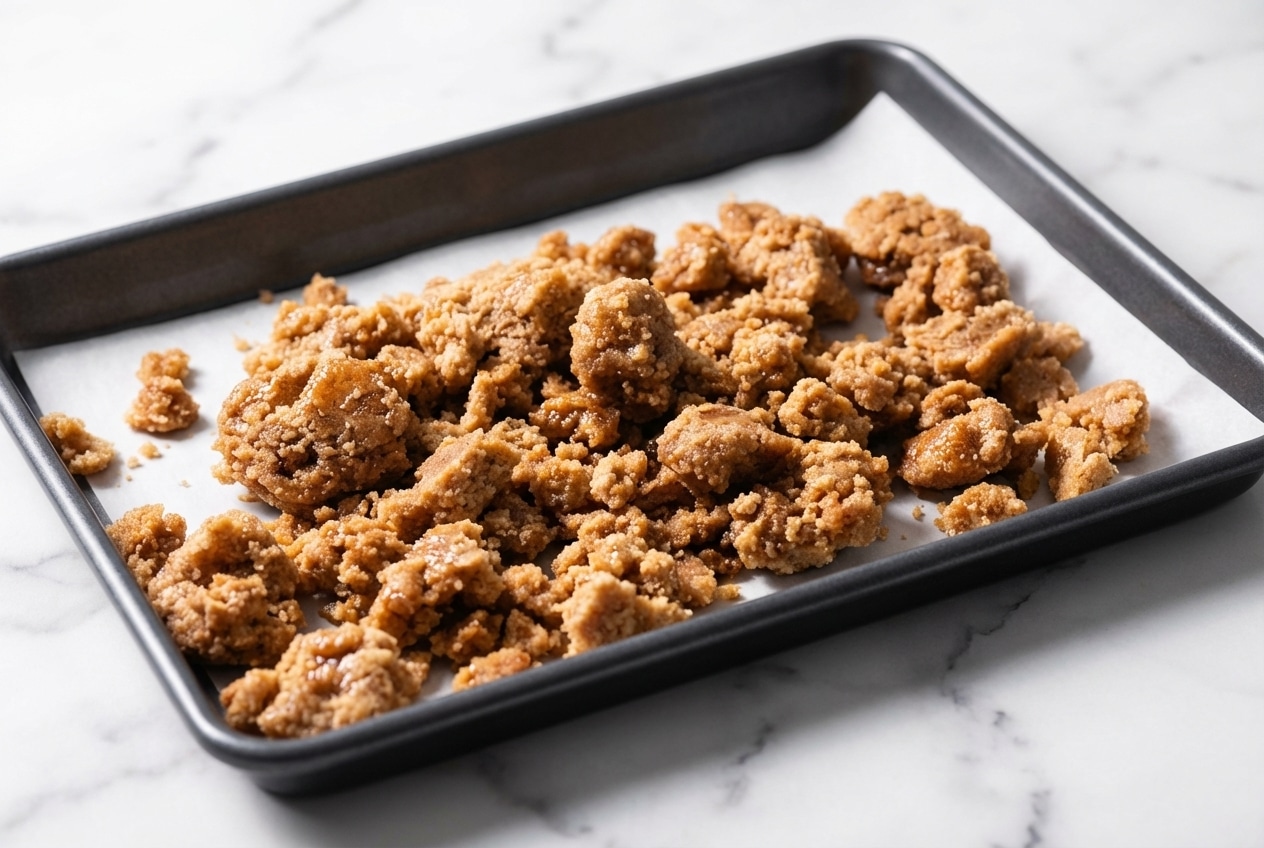
In my kitchen, crumble topping is the little finishing touch that makes people hover near the oven, waiting for that first crackly bite. I have made it for apple crisps, blueberry muffins, even as a sneaky garnish over vanilla ice cream when company drops by.
This version leans “bakery-style”, the kind of golden crunch that holds its own against juicy fruit. The secret is flavor building, browned butter for nutty depth, plus a whisper of espresso to make the brown sugar taste bigger, not coffee-like.
Why You’ll Love This Recipe
Browned-butter magic: In my bowl, beurre noisette turns a basic Streusel into something toasty and sophisticated, with that warm, hazelnut-like aroma that makes the whole house smell like a pastry shop.
Espresso, but not “coffee”: A tiny pinch of espresso powder acts like a flavor amplifier, deepening brown sugar and cinnamon so the crumble topping tastes richer without stealing the spotlight.
Big, bakery clumps: This method builds pebble-to-marble crumbs that bake up crunchy, not dusty, and they keep a shortbread texture even on top of bubbling fruit.
Works on everything: I use it for crisps and cobblers, muffin tops, and even as a standalone crunchy garnish when I want texture fast.
Ingredients and Substitutions

These are pantry staples, but the balance matters. Flour gives structure, brown sugar brings caramel notes, and melted butter ties everything into clumps that bake up crisp.
Ingredients
- 140 g (1 cup) all-purpose flour
- 165 g (¾ cup) light brown sugar
- 1 teaspoon baking powder
- 1 teaspoon ground cinnamon, optional
- ½ teaspoon salt
- 113 g (½ cup) unsalted butter, melted and cooled
Ingredient Notes & Substitutions
Light brown sugar: This gives a classic caramel sweetness and a tender bite, dark brown sugar works too if you like a deeper molasses note and slightly chewier clumps.
All-purpose flour: For a heartier vibe, a portion of whole wheat flour adds a gentle nuttiness, and a 1-to-1 gluten-free baking flour blend usually behaves nicely in this style of topping.
Baking powder: It looks small, but it helps the crumble bake up a touch lighter, nudging it toward that shortbread texture instead of a heavy, compact topping.
Ground cinnamon, optional: I love it with apples and stone fruit, but I leave it out for berry desserts when I want the fruit to stay bright.
Unsalted butter, melted and cooled: Unsalted keeps your salt level in your control, and cooling matters so the sugar does not melt into paste before you get those beautiful crumbs.
How to Make crumble topping
Mix the dry base
- In a medium bowl, whisk the all-purpose flour, light brown sugar, baking powder, ground cinnamon (optional), and salt until the color looks even and you do not see sugar clumps hiding in the corners.
- Use your fingertips to break any stubborn brown sugar nuggets, the mixture should look sandy and uniform, with a cozy cinnamon scent if you added it.
Add the butter and build crumbs
- Drizzle in the unsalted butter, melted and cooled, and start tossing with a fork so the flour coats the butter instead of turning greasy.
- Keep mixing just until you see moist crumbs form, from pea-sized bits to bigger marble-like clumps that hold together when you pinch them.
Chill until you need it
Spoon the crumble topping into an airtight container and refrigerate for up 5 days, it will firm up and be easy to sprinkle in generous clumps whenever dessert calls.
The Science of the Perfect Crunch

Great crumble is really a fat-to-flour story. Too much flour tastes sandy, too much butter turns greasy, and this ratio lands right in that crisp, cookie-like middle where the crumbs set before they soak.
That tiny lift from baking powder creates micro-pockets as it bakes, which is why the topping eats a bit like shortbread instead of wet sand. When I want extra crunch on juicy fruit, I keep the topping cold until the last second so it hits the oven firm.
Browning butter takes it even further because the milk solids toast and deepen in flavor. The chemistry behind a Maillard reaction in milk solids explains that nutty, toffee-like aroma you smell.
Pro Tips & Troubleshooting
Pro Tips
- Let the melted butter cool slightly before mixing, warm butter dissolves sugar and steals your clumps.
- Hand-mixing with a fork gives control, you decide whether you want fine crumbs or bold, craggy nuggets.
- A 10 minute rest after mixing helps hydration, the crumble clumps bake sturdier.
- For sweet heat, a drizzle of homemade hot honey plays beautifully against buttery crunch.
- If you add oats, old-fashioned rolled oats stay toothsome, and the structural integrity of rolled oats is why they hold shape better.
Common Mistakes to Avoid
- Adding butter that is still hot, it can melt the sugar and turn the mix pasty.
- Overworking the bowl until it becomes one slab of dough, stop when clumps look irregular and pretty.
- Using quick oats if you riff with oats, they soften fast and lose texture.
- Sprinkling topping over a very warm filling too early, the butter melts before the oven can set a crust.
Serving & Storage

Creative Serving Ideas
Dutch apple-style pies love this topping, it bakes up golden and dramatic. I also sprinkle it over muffin batter so the tops crackle like a bakery case.
For a decadent brunch plate, this crumble is a crunchy finisher on ice cream toast, especially with berries on the side. The same idea works on cottage cheese pancakes when you want contrast to that tender crumb.
In layered desserts, baked crumble adds instant texture between creamy layers. It fits naturally in a strawberry trifle recipe when you want a little crunch with each spoonful.
Storage & Make-Ahead Tips
Refrigeration is simple, keep the raw crumble in an airtight container for 5 days, then sprinkle it cold onto fruit crisps, cobblers, or muffins before baking.
Freezing is even better for planning, press out the air in a freezer bag and freeze up to 3 months, then use it straight from frozen. In my kitchen, I label the bag because it disappears fast.
Because this is flour-based, I treat it like any raw dough and avoid tasting it before baking. Guidance on safe handling of raw dough is especially helpful for families baking together.

Bakery-style Crumble Topping

Equipment
- Medium bowl
- whisk
- Fork
Ingredients
- 140 g all-purpose flour (1 cup)
- 165 g light brown sugar (¾ cup)
- 1 teaspoon baking powder
- 1 teaspoon ground cinnamon, optional
- ½ teaspoon salt
- 113 g unsalted butter, melted and cooled (½ cup)
Instructions
Mix the dry base
- In a medium bowl, whisk the all-purpose flour, light brown sugar, baking powder, ground cinnamon (optional), and salt until the color looks even and you do not see sugar clumps hiding in the corners.
- Use your fingertips to break any stubborn brown sugar nuggets. The mixture should look sandy and uniform with a cozy cinnamon scent.
Add the butter and build crumbs
- Drizzle in the melted and cooled unsalted butter. Start tossing the mixture with a fork so the flour coats the butter instead of turning greasy.
- Keep mixing just until moist crumbs form. You should see a mix of pea-sized bits and bigger marble-like clumps that hold together when pinched.
Chill until you need it
- For the best results, let the mixture rest for 10 minutes to allow the flour to hydrate. This helps the clumps stay sturdy when baked.
- Spoon the crumble topping into an airtight container and refrigerate for up to 5 days. It will firm up and be easy to sprinkle in generous clumps whenever dessert calls.
Notes
Nutrition
Conclusion
If you want crumble topping that tastes like it came from a real bakery case, lean on browned butter and that tiny espresso boost. Keep the butter cooled, stop mixing while the clumps still look rustic, and you will get that golden crunch that makes people ask what your secret is.
Once you get the base down, small twists are easy, add oats, swap spices, or bake some separately to stash in a jar for last-minute sprinkles.
Frequently Asked Questions
How do I make my crumble topping extra crunchy?
Let the mixture rest briefly after mixing so the flour hydrates, then keep it chilled until it goes into a hot oven. Cold fat sets the crust faster, which helps the crumbs stay crisp over juicy fillings.
Should I use light or dark brown sugar?
Light brown sugar gives a clean caramel sweetness and a classic bakery flavor. Dark brown sugar adds more molasses depth and can make the clumps a touch chewier, both work well.
Why did my crumble melt into the fruit filling?
Usually the butter was too warm when it hit the dry ingredients, or the filling was steaming hot when topped. Cool the butter properly, then chill the finished crumble so it bakes up as a separate layer.
Can I use gluten-free flour for this recipe?
Yes, a 1-to-1 gluten-free baking flour blend is the easiest swap and keeps the same crumbly structure. Watch the texture as you mix, you still want distinct clumps, not a smooth dough.
How long does homemade crumble topping last in the freezer?
Up to 3 months when sealed well in a freezer bag. I sprinkle it on desserts straight from frozen, it actually helps the topping stay crunchy.
Is this good on ice cream, and how would you serve it?
It is fantastic baked separately until golden, then cooled completely so it snaps. For a fun dessert twist, it pairs nicely with chewy treats like mochi ice cream where the contrast in textures is the whole point.