Skip to content
In my American home kitchen, a good balsamic glaze is the little flourish that makes dinner feel like a white tablecloth moment, whether it’s a steakhouse-style plate or an Italian-American Caprese salad on a Tuesday. I keep a bottle in the pantry, but the truth is, store-bought versions often lean on thickeners and stabilizers that taste a bit “processed” on the tongue.
This homemade balsamic glaze is a quick reduction with a simple twist that makes it feel chef-level. It’s perfect for home cooks who want bold flavor, glossy texture, and a finish that drizzles like a dream, not one that turns into chewy candy after cooling.
Why You’ll Love This Recipe
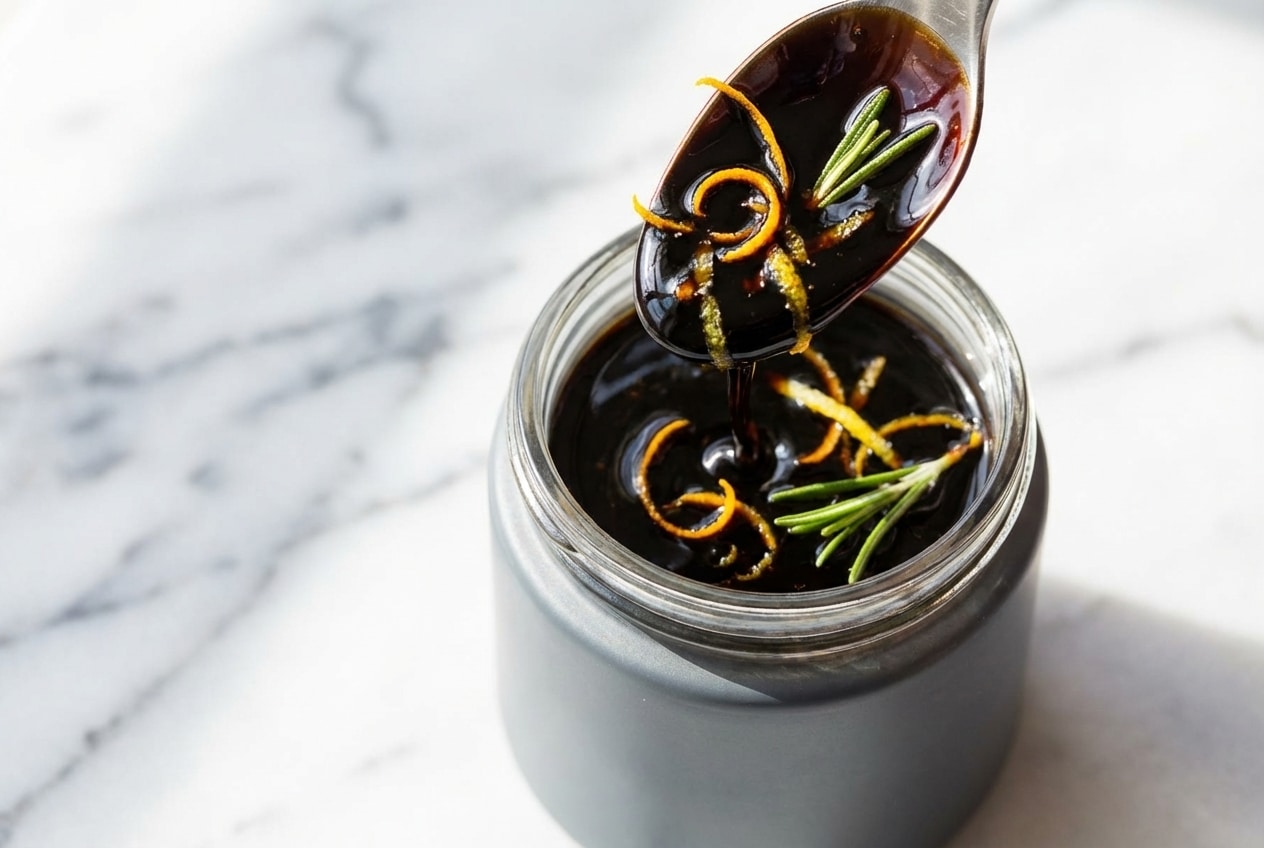
The aromatic citrus-rosemary steep: I discovered that one rosemary sprig and a wide strip of orange zest soften balsamic’s sharp acetic acid, giving it a piney, bright lift that tastes expensive.
Scientific balance in every drizzle: Those citrus oils add a high-note sparkle that cuts through the sweetness, so the reduction tastes layered instead of flat, even when the grape must is naturally rich.
Texture control you can trust: This method teaches the spoon test and the cooling reality, so you land on syrup consistency, not the dreaded hard-candy stage.
Versatility beyond salads: I use this balsamic glaze on savory mains and also over fruit and ice cream, because the rosemary-orange perfume plays surprisingly well with dessert.
Ingredients and Substitutions

You only need two basics to build a glossy reduction. The vinegar provides the backbone, and the honey, if you use it, rounds the edges and boosts shine.
Ingredients
- 1 cup balsamic vinegar
- 1/2 Tbsp honey, (optional)
Ingredient Notes & Substitutions
Balsamic vinegar selection: A mid-range Aceto Balsamico di Modena with IGP certification is my go-to for reduction technique. I skip Traditional balsamic here because heat flattens those delicate aged notes you paid for.
Sweetener options: Honey adds a gentle floral finish and helps nudge the viscosity in a friendly direction. You can leave it out for a more tart glaze, just expect it to need the full simmer time to reach that syrupy coat.
The twist additions: For the infusion, I add one fresh rosemary sprig and one wide strip of orange zest with the pith removed. They are “secret” aromatics in the sense that they make the glaze taste brighter and more grown-up without adding complexity to the process.
How to Make balsamic glaze
Build the base in the pan
- Set a wide, non-reactive saucepan on the stove, then pour in the balsamic vinegar. Add the honey (optional) and swirl the pan so everything is evenly combined, it should look uniformly dark and fluid.
- Nestle in a rosemary sprig and a wide strip of orange zest before you turn on the heat. This early steep matters because the oils bloom gently as the vinegar warms, and the kitchen starts to smell less sharp and more like herby citrus.
Bring it up, then hold a calm simmer
- Turn the heat up until you reach a low boil, then immediately reduce the heat to maintain a simmer for 12-15 minutes. You’re looking for small, steady bubbles, not a rolling, angry boil that risks scorching.
- Stir occasionally, especially as it reduces, and watch the aroma change from punchy vinegar to a mellow, almost jammy sweetness. As water evaporates, the surface becomes glossier and the liquid starts to cling slightly to the spoon.
Use the spoon test, then cool and store
Once it’s reduced at least by half, test it on a spoon, it should lightly coat the back and a fingertip should leave a clean path. Transfer to a mason jar or air-tight container, let it cool to room temperature, then refrigerate for 3 to 4 weeks, it will thicken more as it cools.
Secrets for a Flawless Reduction

Temperature precision: A rolling boil is the fastest way to push the sugars toward a harsh edge, where the Maillard reaction goes wrong and bitterness creeps in. Keep the bubbles small and polite, that’s how you protect flavor and avoid scorch marks on the bottom.
The window of overcooking: Here’s the trap I see most often, if it looks like thick pancake syrup while it’s still hot, it will likely set up like hard candy once cold. In the pan, aim for “lightly coats a spoon” rather than “slow ribbons,” because cooling tightens the viscosity dramatically.
Surface area physics: A wider saucepan gives you faster, more even evaporation, so the reduction happens predictably without having to crank the heat. A small deep pot concentrates heat at the bottom, and that’s where burning starts in seconds.
White balsamic variation: White balsamic can turn amber quickly, so I keep the heat slightly lower and stay patient with the simmer. You’ll still get syrup consistency, but with a paler golden glaze that’s gorgeous on chicken, pears, and fresh mozzarella.
Pro Tips & Troubleshooting
Pro Tips
- Turn on the kitchen vent, vinegar fumes get intense as it reduces.
- Use a glass mason jar for storage, high acidity and plastic do not play nicely.
- If your vinegar is overly sharp, a small splash of water during the simmer can soften the bite.
- A drizzle of spicy-sweet honey is fun too, a homemade hot honey recipe adds gentle heat without overpowering.
Common Mistakes to Avoid
- Walking away in the last 5 minutes, once water is low, burning happens fast.
- Over-reducing past the 50 percent mark, it thickens a lot as it cools.
- Using pricey Traditional balsamic, the nuance disappears under heat.
- For sticky stainless steel, soak with hot water and baking soda until the glaze loosens.
Serving & Storage

Serving Ideas
Savory pairings: I love a thin drizzle over Caprese salad, roasted Brussels sprouts, or even a slice of Margherita pizza right before serving. The same glossy finish is fantastic on roasted cabbage steaks, where tangy-sweet meets nutty Parmesan.
Pizza night twist: When you want something playful, a tiny zigzag on pickle pizza creates that sweet-sour contrast you usually only get from good deli mustard and relish. Keep the drizzle light so it stays a finishing touch, not a sauce.
Protein finishes: Brush it over grilled salmon or lamb chops in the final minute of cooking, when the heat kisses it into a shiny lacquer. That last-minute glaze smells deeply caramelized and herbaceous, especially with the rosemary infusion.
Sweet contrasts: The classic is vanilla bean ice cream and fresh strawberries with a glossy balsamic ribbon. If you like fruit-forward desserts, a spoonful over a strawberry trifle tastes like a restaurant secret, rich chocolate, bright berries, and a tangy finish.
Storage & Make-Ahead
This glaze keeps 3 to 4 weeks in the refrigerator in an airtight glass container. Room-temperature storage is risky with homemade reductions, and guidance on high-acid food storage safety aligns with treating it like a perishable condiment.
If it firms up too much after chilling, warm the jar in a bowl of hot water until it loosens. A teaspoon of warm water stirred in can also bring it back to a pourable consistency without dulling the flavor.

Balsamic Glaze

Equipment
- Wide non-reactive saucepan
- Wooden spoon
- Glass mason jar
Ingredients
- 1 cup balsamic vinegar
- 1/2 Tbsp honey, (optional)
Instructions
Build the base in the pan
- Set a wide, non-reactive saucepan on the stove, then pour in the balsamic vinegar. Add the honey if using and swirl the pan until the mixture is evenly combined and fluid.
- Nestle in a fresh rosemary sprig and a wide strip of orange zest before turning on the heat to allow the aromatics to bloom as the liquid warms.
Bring it up, then hold a calm simmer
- Turn the heat up to reach a low boil, then immediately reduce to a low simmer. Maintain this simmer for 12 to 15 minutes, looking for small, steady bubbles.
- Stir occasionally as the mixture reduces. Watch for the aroma to mellow and the surface to become glossy as the liquid starts to cling to the spoon.
Use the spoon test, then cool and store
- Once reduced by half, test the consistency by coating the back of a spoon. A fingertip should leave a clean, distinct path through the glaze.
- Transfer the glaze to a glass mason jar. Let it cool completely at room temperature before sealing and refrigerating for up to 4 weeks.
Notes
Nutrition
Conclusion
Once you make balsamic glaze this way, it’s hard to go back to the bottled stuff. The rosemary and orange zest steep is the small move that makes the finish taste polished, bright, and balanced.
Keep it in the fridge, drizzle it boldly, and let it surprise you on everything from pizza to strawberries. When you feel like playing with heat and sweetness, that same jar pairs beautifully with a homemade hot honey recipe on roasted veggies and grilled meats.
Frequently Asked Questions
How long does homemade balsamic glaze last in the fridge?
Stored in an airtight glass container, it lasts 3 to 4 weeks in the refrigerator. It will continue to thicken as it sits, so re-warm gently if needed.
Why is my balsamic glaze not thickening?
It usually needs more time at a steady simmer so enough water can evaporate and the sugar concentration can rise. Keep the heat low, look for small bubbles, and continue until it coats the back of a spoon.
Can I make balsamic glaze without added sugar?
Yes, you can reduce just the vinegar for a more tart profile. It can take slightly longer to reach a syrupy state because you’re relying on the natural grape must sugars alone.
What is the best type of balsamic vinegar to use for a reduction?
A mid-range Aceto Balsamico di Modena with IGP certification is ideal, it has good body and sweetness without wasting an expensive aged bottle. Extremely cheap vinegars can work, but they may taste harsher, and sometimes benefit from a tiny splash of water during simmering.
How do I fix burnt balsamic glaze?
Unfortunately, once it’s scorched, the bitterness is permanent, and straining will not remove it. The best save is starting over and keeping a close eye during the final 5 minutes.