Skip to content
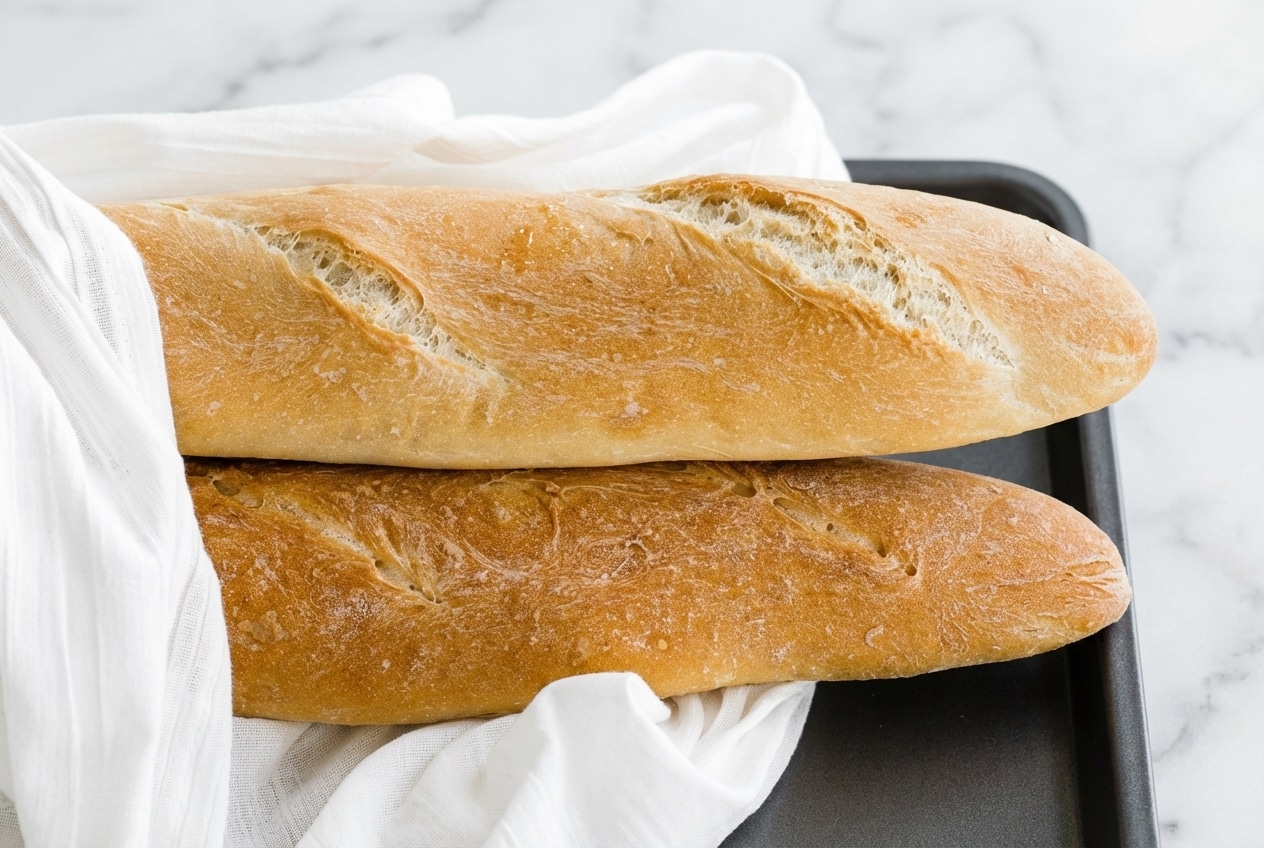
There’s a very particular perfume that hits you when you walk past a neighborhood bakery, warm wheat, a little sweetness, and that toasty crust that crackles the second you tear it. In my American home kitchen, I chased that aroma for years, and my loaves kept coming out pale or a bit soft.
This homemade french bread is my answer to that problem, built for real life, weeknights, and normal ovens. The trick is a Double-Hydration Steam Method that gives you dramatic oven spring and a shatter-crisp crust, with a soft, airy crumb that makes you want “just one more slice.”
Why You’ll Love This Recipe
That bakery crackle at home: Spritzing the oven walls three times in the first five minutes creates the steamy blast your loaf needs for bold oven spring and a crust that actually sings as it cools.
Deep color without an all-day ferment: A tiny boost from sugar helps browning along, and with the right heat and steam you get that mahogany glow that looks like it came from a pro deck oven.
Airy crumb, confident structure: With proper gluten development, the inside stays plush and light, while the outside sets up crisp and golden, the contrast is the whole point of French bread.
Ingredients and Substitutions

These are pantry-simple essentials, but each one earns its place. The water temperature, the yeast, and bread flour work together to build a dough that bakes up crisp outside and tender inside.
Ingredients
- 2 ¼ cup warm water, 112° to 115°
- 2 teaspoons sugar
- 1 packet active yeast
- 2 teaspoons sea salt
- 2 teaspoons softened unsalted butter
- 5 cups bread flour
Ingredient Notes & Substitutions
Bread flour: That higher protein level is what gives French bread its chew and strength, it builds a sturdier gluten network for shaping a bâtard-style loaf. All-purpose flour can work in a pinch, but expect a softer bite and a tighter crumb.
Warm water: Keep it in the 112° to 115° range, it should feel like a warm bath, not hot. Anything above 120°F can knock out the yeast, and anything below 100°F can leave it sluggish and slow to wake.
Active yeast: If your yeast is lively, you’ll see a foamy “raft” after the 5 to 7 minute rest, and you’ll smell that fresh, bready fermentation right away. If it sits flat and smells like wet flour, it’s wiser to start over than waste flour.
Sea salt: Salt isn’t only for flavor, it also tightens gluten development so the dough holds its shape and rises upward instead of spreading wide.
Softened unsalted butter: This tiny enrichment helps tenderness without turning the bread into a soft sandwich loaf. If your kitchen is cold, soften it fully so it blends in smoothly rather than tearing the dough.
How to Make homemade french bread
Wake up the yeast and build the dough
- Pour ½ of the warm water into the bowl of a stand mixer, then add the sugar and yeast. Whisk until it looks evenly cloudy, then let it stand for 5 to 7 minutes until you see foam and a little “raft” on top.
- Add the remaining water, then sprinkle in the sea salt and add the softened butter. Tip in the bread flour and mix until the shaggy dough gathers, it should look rough at first, then start pulling away in stretchy strands.
Knead, then let bulk fermentation do its magic
- Knead with the dough hook for 8 to 10 minutes. The dough can feel a little sticky, but it should look smoother, elastic, and slightly glossy by the end.
- Use the Windowpane Test to know you’re done, pinch off a small piece and gently stretch it. If it thins enough to let light through without tearing, your gluten development is ready for a lofty rise.
- Cover the bowl tightly with plastic wrap and set it in a warm spot for 90 minutes, until it doubles and looks pillowy. When you press a fingertip in, the dent should slowly spring back.
Shape the loaves and proof
- Remove the cover and punch the dough down to its original size, releasing that trapped air with a soft whoosh. If it clings to your hands, dust lightly with flour just to make it manageable.
- Knead on a clean floured surface for 1 to 2 minutes, just until the dough feels taut again. Cup your hands around it and turn it against the counter to form a smooth, round ball.
- Cut into 4 equal parts, or into 3 equal parts for thicker loaves. Working with one piece at a time, press it into an oval, then fold up by 1/3 and fold again by 1/3 so the seam meets neatly.
- Pinch the seams shut with your fingertips, then roll the dough until it’s roughly 12 to 16 inches long with tapered ends. Place on a parchment-lined sheet tray, cover with plastic wrap, and proof for 60 minutes in a warm place until slightly puffy and springy.
Steam, score, and bake until bronzed
- Preheat the oven to 425°F and place a pan filled with water on the bottom rack. This steam pan is your best friend for a crisp, blistered crust.
- Uncover the loaves and score 3 long slices on a bias, about 1/2 inch deep, using a sharp knife or razor. Spray or brush the tops with water so the surface stays flexible for maximum expansion.
- Bake on the middle rack at 425°F for 22 to 25 minutes, until browned on top and cooked through. During the first 5 minutes, spray the oven walls three times to supercharge the steam and boost oven spring.
- Cool to room temperature before slicing, the crust will firm and crackle as it cools. If you cut too early, the interior can turn gummy because the steam hasn’t finished setting the crumb.
Secrets for a Bakery-Quality Loaf

The real divider between “good homemade bread” and “bakery-level French bread” is gluten development, shaping tension, and steam. Once you get those right, the rest feels almost unfairly easy.
The Windowpane Test: I don’t guess when kneading is done anymore. The dough should stretch thin enough to show light without ripping, and Kansas State’s guide to the Windowpane Test matches exactly what I look for.
Solving loaf blowouts: When a loaf cracks on the side, it’s usually begging for a deeper score. Those 1/2 inch cuts act like planned “release valves,” so the expansion happens on top where it looks gorgeous.
Altitude adjustments: At high elevation, dough can rise faster and dry out easier. I slightly increase water and decrease yeast just a touch, then watch the dough’s look and feel more than the clock.
Steam and browning science: That burnished crust is the Maillard reaction at work, sugars and proteins browning under heat. The American Chemical Society’s explanation of the Maillard reaction is exactly why a little sugar plus strong heat can turn your loaf so beautifully bronze.
Avoid bench flour when shaping: Extra flour can get trapped in seams and make the crumb heavy. I prefer lightly oiled hands, the dough stays supple, and the final loaf bakes up lighter.
Pro Tips & Troubleshooting
Pro Tips
- Let the dough proof in an off oven with the light on, it creates a gentle warm box that helps bulk fermentation and proofing stay consistent.
- Use a thermometer for doneness, the center should land between 190°F to 205°F for a fully baked crumb that isn’t gummy.
- Score with confidence, 1/2 inch deep gives the loaf room to bloom instead of tearing on the sides.
- Keep shaping tight by pinching seams well, surface tension is what helps a bâtard hold its form.
Common Mistakes to Avoid
- Slicing too soon, the steam needs time to settle the interior structure.
- Skipping the steam pan, a dry oven leads to a dull, softer crust.
- Over-flouring the bench, it can turn the loaf dense and dry.
- Water that’s too hot or too cool, yeast either dies or never wakes up.
Serving & Storage

Creative Serving Ideas
For classic table bread, I serve thick slices still slightly warm with salted butter and a few sea salt flakes. That simple bite shows off the contrast between crackling crust and airy crumb.
For steak sandwiches, toasted slices rubbed with a raw garlic clove taste bold and old-school. The garlic perfume clings to the crunchy surface in the best way.
When the loaf is a day old, French bread pizza is pure practicality, split it lengthwise, add marinara and mozzarella, and bake until bubbly. The drier crumb actually soaks up sauce better without turning soggy.
A cozy pairing I love is bread with a bowl of protein tomato soup, because the acidity and richness play beautifully together. The crust stands up to dunking like it was made for it.
Day-old slices also make an unreal breakfast, especially when turned into creamy french toast that drinks up custard without falling apart. That’s when slightly stale bread becomes a quiet luxury.
Storage for Long-Lasting Freshness
The paper bag rule: Keep French bread at room temperature in a paper bag for up to 2 days, it protects the crust while letting it breathe. Plastic traps moisture and turns that crisp shell soft and rubbery.
Freezing: Slice the loaf once it’s fully cool, then freeze in zip-top bags for up to 3 months. Reheat straight from frozen in a hot oven until the edges feel crisp again and the center is warm.

Crispy Homemade French Bread

Equipment
- Stand mixer
- Sheet tray
- Parchment paper
- Spray bottle
- Sharp knife or razor
Ingredients
- 2 1/4 cup warm water, 112° to 115°
- 2 teaspoons sugar
- 1 packet active yeast
- 2 teaspoons sea salt
- 2 teaspoons softened unsalted butter
- 5 cups bread flour
Instructions
Wake up the yeast and build the dough
- Pour 1/2 of the warm water into the bowl of a stand mixer, then add the sugar and yeast. Whisk until evenly cloudy, then let it stand for 5 to 7 minutes until foam forms on top.
- Add the remaining water, sprinkle in the sea salt, and add the softened butter. Tip in the bread flour and mix until a shaggy dough begins to gather and pull away in stretchy strands.
Knead, then let bulk fermentation do its magic
- Knead with the dough hook for 8 to 10 minutes until the dough looks smooth, elastic, and slightly glossy.
- Perform the Windowpane Test by stretching a small piece of dough; it should thin enough to let light through without tearing.
- Cover the bowl tightly with plastic wrap and set in a warm spot for 90 minutes until the dough doubles in size and feels pillowy.
Shape the loaves and proof
- Punch the dough down to release trapped air. Knead on a clean floured surface for 1 to 2 minutes until the dough feels taut again, then form it into a smooth ball.
- Cut the dough into 4 equal parts. Press each piece into an oval, fold by thirds so the seam meets, and pinch the seams shut.
- Roll each piece into a 12 to 16-inch loaf with tapered ends. Place on a parchment-lined tray, cover, and proof for 60 minutes in a warm place until puffy.
Steam, score, and bake until bronzed
- Preheat the oven to 425°F and place a pan filled with water on the bottom rack for steam.
- Score 3 diagonal slices 1/2 inch deep on each loaf. Spray or brush the tops with water to keep the surface flexible.
- Bake at 425°F for 22 to 25 minutes. During the first 5 minutes, spray the oven walls three times with water to boost the oven spring.
- Cool to room temperature before slicing to allow the interior structure to set and the crust to crackle.
Notes
Nutrition
Conclusion
When this loaf comes out right, you hear it before you taste it, that gentle crackle as the crust cools, then the soft, open crumb inside. The Double-Hydration Steam Method is the bridge between a home oven and that bakery feeling.
Once you’ve baked it a couple times, you’ll start making tiny adjustments like shaping tighter or scoring bolder, and it becomes second nature. If you’re craving a sweet and savory moment, a thin drizzle from a hot honey recipe turns a warm slice into something special.
Frequently Asked Questions
Can I use All-Purpose flour instead of Bread flour?
Yes, but bread flour is preferred for classic chew and a lighter, holey crumb. For protein content differences, bread flour generally runs higher, which strengthens gluten and improves structure.
How do I get that signature crackly French bread crust?
Steam is the whole secret in a home oven. Preheat with a water pan on the bottom rack, spray the tops with water, then spray the oven walls three times during the first 5 minutes, that early steam keeps the crust flexible so it can expand, then it dries into a shatter-crisp finish.
Why didn’t my bread rise during baking (oven spring)?
The most common causes are over-proofing or under-kneading. If the dough proofed too long, the yeast has less energy left for the oven, and if gluten development is weak, it can’t trap gases to lift the loaf.
How long does homemade French bread stay fresh?
At room temperature in a paper bag, it’s best within 2 days for a crisp crust. For longer storage, slice and freeze in zip-top bags for up to 3 months, then reheat slices to bring back the crunch.
Can I make a lower-carb alternative instead of yeast bread?
This recipe relies on yeast and bread flour for its structure and crust, so it won’t translate cleanly to low-carb swaps. If you want a different style altogether, cottage cheese flatbread is a handy high-protein option with a totally different texture and bake.