Skip to content
Every baker in the U.S. has had that moment, you’re ready to make cheesecake or frosting, and the cream cheese is still a cold brick from the fridge. In my kitchen, learning how to soften cream cheese quickly became the difference between silky batter and stubborn little lumps that never quite disappear.
This guide is for anyone who wants smooth, predictable results without risking melted edges or a grainy texture. I’ll show you my fastest, most reliable method, plus the small details that make cream cheese behave beautifully at room temperature.
Why This Method Changes Everything
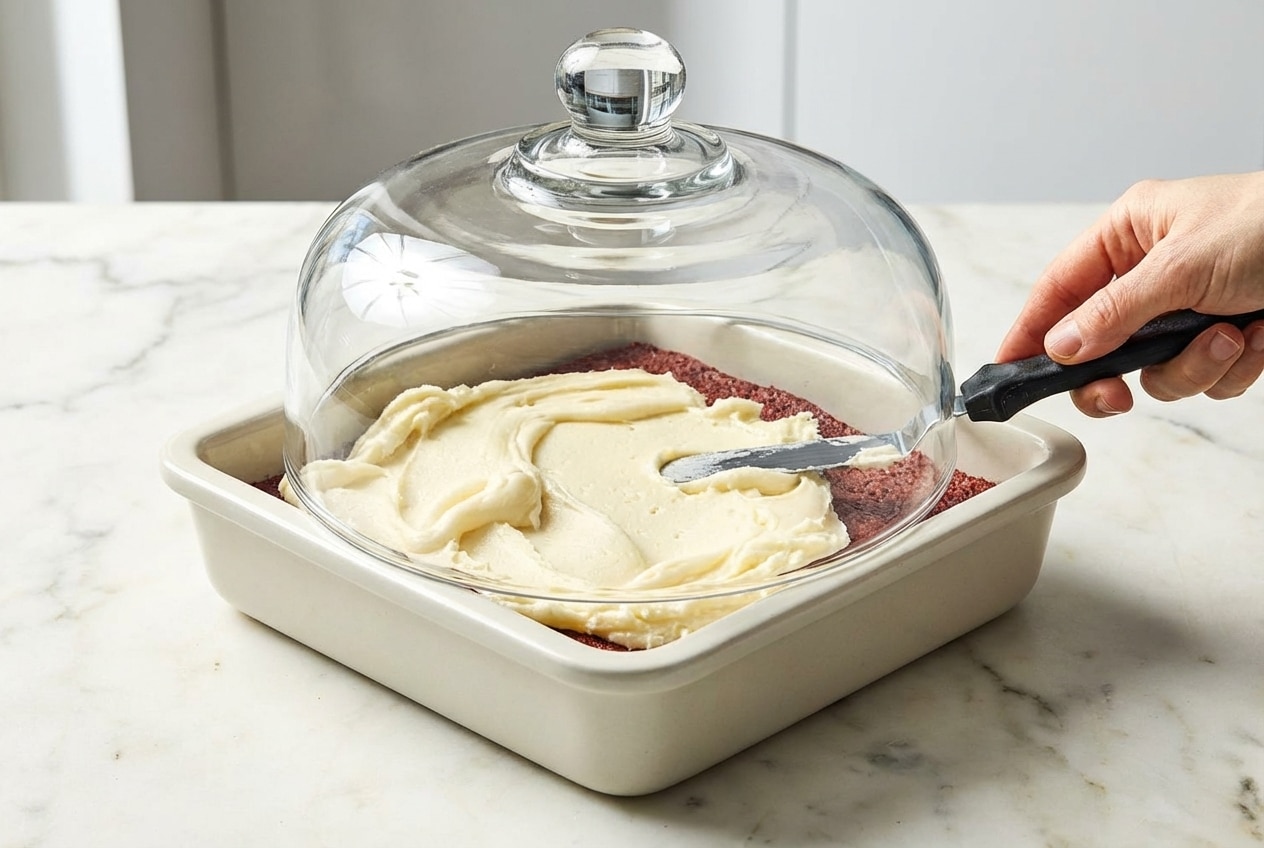
Even softening, no surprises: The warm glass dome trick creates a gentle “greenhouse” so the cream cheese warms from all sides instead of drying out on top.
Billowy texture for baking: I reach for this when I need cream cheese to whip smoothly into frosting or cheesecake, because it protects that delicate fat-and-water balance.
Faster than waiting around: Instead of parking a block on the counter forever, this shortens the time while staying in the safe room temperature window.
Consistency you can feel: When you hit that 60 to 65°F sweet spot, the cheese blends like velvet, not like cold clay.
Ingredients and Substitutions

You only need one ingredient, but the brand and fat level affect how quickly it softens and how smooth it creams into batter.
Ingredients
- 8-ounce blocks of Philadelphia Original cream cheese
Ingredient Notes & Substitutions
Philadelphia Original cream cheese: This is my go-to for baking because it stays stable when creamed, which helps frosting hold its shape and keeps cheesecake batter silky.
Full-Fat vs. Low-Fat: Note that Neufchatel or low-fat cream cheese has a higher moisture content and may soften up to 5 minutes faster than original blocks.
Brand Differences: While we recommend Philadelphia for its stability in baking, generic brands will follow the same softening principles but may require closer monitoring of the spreadability test.
How to Make how to soften cream cheese
Prep the Block
- Unwrap an 8-ounce block of cream cheese, and give it a quick look for any torn foil bits stuck to the sides. Starting clean matters, because once it softens, everything clings.
- Cut the block into eight 1-ounce cubes with a sharp knife. You’re aiming for neat chunks so they soften at the same pace, not a mix of mushy corners and cold centers.
Set Up for Fast, Even Warming
- Set the cubes on an aluminum baking sheet with about 1/2-inch of space between them. That breathing room lets warmer air reach every side, and the metal helps move heat into the cold cheese.
- Leave the tray at room temperature for 25 to 30 minutes, until the cubes reach 60 to 65°F (15 to 18°C). They should look matte and relaxed, not glossy or oily.
Do the “Yield” Test
Press a cube gently with a finger or spoon, it should give easily and leave a clear indent, feeling pliable and silky but still holding its shape. If it smears like butter, it’s gone a touch too far for frosting, and better suited for savory dips.
Secrets for a Perfectly Smooth Texture

Most cream cheese problems in baking come down to temperature and texture, not talent. When it’s properly softened, it creams into sugar without leaving pebble-like bits, and your frosting turns billowy instead of gritty.
Thermal conductivity matters: Aluminum is the quiet hero here, because it transfers heat far faster than ceramic or wood. That gentle, steady warmth keeps the cream cheese softening evenly instead of sweating at the edges.
The spreadability test: If you don’t have an instant-read thermometer, watch the surface. Softened cream cheese looks matte and smooth, and when you press it, the indent stays clean instead of springing back.
Emulsification, protected: When cream cheese overheats, the emulsion can break and turn grainy. The warm-dome approach avoids harsh heat, and it reminds me of how fat structure affects texture in the delicate emulsion of the fats.
Humidity and altitude: In dry climates or at high altitude, uncovered cream cheese can “skin” on the outside while staying firm inside. The dome traps gentle moisture and warmth so the cubes soften without drying at the edges.
If you like that ultra-silky, no-lumps goal, it’s the same mindset I use when smoothing blended cottage cheese for a creamy base. Texture work is often the hidden step between homemade and bakery-level.
Pro Tips & Troubleshooting
Pro Tips
- Go smaller for speed: Cubes soften faster than a whole block because more surface is exposed to warm air.
- Extreme rush option: Spread the cream cheese thinly on a large plate with a stiff spatula, then scrape it back together once pliable.
- Stand mixer assist: If it’s only slightly cool, beat it alone on medium-low for 2 to 5 minutes, friction helps warm it without melting.
- Use a thermometer for “high stakes”: For cheesecake, I like confirming 60 to 65°F for predictable mixing.
Common Mistakes to Avoid
- Microwaving on full power: High heat creates hot spots that melt the outside and leave the center cold, which often leads to grainy frosting.
- Leaky water bath softening: If water sneaks in, the texture turns strange and loose, even a few drops can do it.
- Leaving it out too long: Cream cheese should not sit at room temperature for more than two hours for FDA safety.
- Over-softening for frosting: Too-warm cream cheese can make frosting slack and weepy instead of fluffy.
Temperature control is a big deal in dairy-heavy cooking, and it shows up in unexpected places. The same “soften, then mix” discipline helps when working with enriched doughs like cottage cheese flatbread, where texture determines tenderness.
Serving & Storage
Creative Ways to Use Softened Cream Cheese
Silky frostings: When the cream cheese is properly softened, it creams smoothly with sugar and butter for a frosting that pipes cleanly and holds its shape on cupcakes.
Lump-free batters: Cheesecake and pound cake both punish cold cream cheese, so softened cubes save you from overmixing and dense texture.
Savory dips: Softened cream cheese becomes an easy, pliable base for herbs, crab, roasted peppers, or hot sauce.
Soft cream cheese makes layered desserts taste especially plush. It slips right into creamy components like my brownie strawberry trifle, where lumps would show up immediately.
For game-day flavors, softened cream cheese blends into dips without fighting you. It’s the same reason creamy bases work so well in a warm cottage cheese queso, smooth texture carries flavor better.
Storage and Make-Ahead Advice
Re-chilling: Softened cream cheese can be re-chilled once, but it may lose a little of that whipped smoothness, so I soften only what I plan to use.
Salvaging melted cheese: If the microwave accidentally turns it shiny or runny, don’t use it for baking. Chill it, then repurpose it in savory dips or sauces where perfect creaming is less important.
Achieving the Perfect Consistency
When you master softening, your baking gets calmer and your results get cleaner. Aim for that slightly cool, pliable feel, and your batter will go glossy and smooth instead of bumpy.
For anyone curious about why cream cheese behaves the way it does, its moisture and fat are tightly defined by federal standards of identity. Lower-fat styles can also soften quicker, since higher moisture content changes how fast warmth moves through.

How To Soften Cream Cheese

Equipment
- Sharp knife
- Aluminum baking sheet
- Instant-read thermometer
Ingredients
- 1 8-ounce block Philadelphia Original cream cheese
Instructions
Prep the Block
- Unwrap an 8-ounce block of cream cheese and carefully check for any torn foil bits stuck to the sides.
- Cut the block into eight 1-ounce cubes with a sharp knife to ensure they soften at an even pace rather than having cold centers.
Set Up for Fast, Even Warming
- Place the cubes on an aluminum baking sheet, leaving about 1/2-inch of space between each piece to let warm air reach all sides.
- Leave the tray at room temperature for 25 to 30 minutes. The cubes should reach 60 to 65.F (15 to 18.C) and look matte and relaxed.
Do the Yield Test
- Press a cube gently with a finger or spoon; it should leave a clear indent and feel pliable without appearing oily or melted.
Notes
Nutrition
Frequently Asked Questions
What is the fastest way to soften cream cheese safely?
Cut it into cubes, spread them out on an aluminum baking sheet, and let them warm at room temperature. That setup gets you to a soft, usable texture much faster than leaving a whole block out.
Can I soften cream cheese in the microwave?
Yes, but keep it gentle, use 50% power in 10-second bursts and stop often to feel the texture. Microwaves heat unevenly, so the edges can melt while the center stays cold, which can ruin frosting and cheesecake texture.
How do I know when cream cheese is “room temperature”?
For baking, you’re looking for 60 to 65°F (15 to 18°C). It should indent easily when pressed, feel pliable and silky, and still look matte rather than shiny.
How long can cream cheese sit out before it goes bad?
Stick to the two-hour rule at room temperature. If it’s been out longer than that, I consider it a safety risk and discard it.