Skip to content
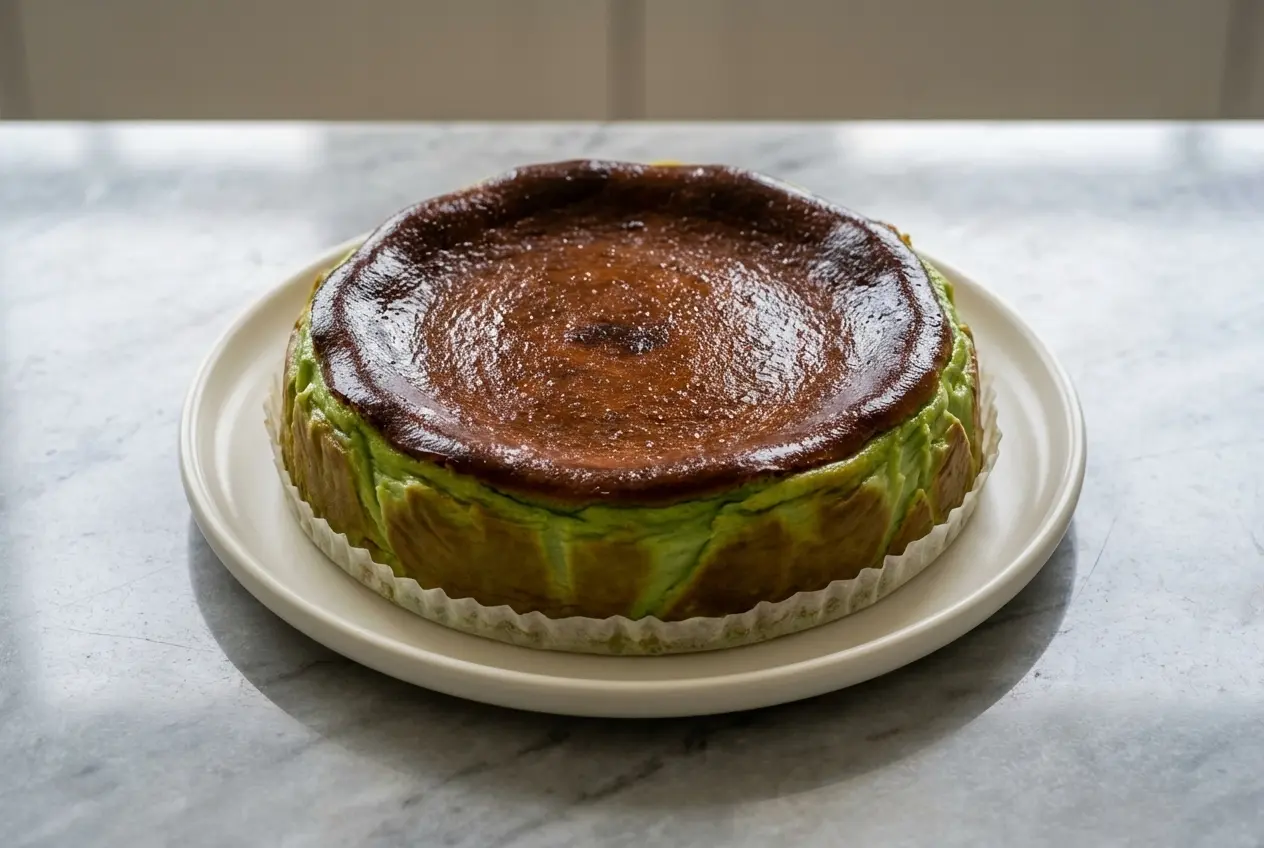
Some desserts stop you in your tracks the moment you slice into them, and this is one of those. In my kitchen, pandan always brings back the soft, fragrant comfort of Southeast Asian dessert shops, while Basque cheesecake brings that dramatic, bronzed top and lush middle that feels a little bit restaurant-worthy.
This pandan basque cheesecake blends both worlds in the best way. It is for bakers who want that signature burnt top, a custard-like center, and a deeper pandan flavor than the usual extract-heavy versions, all with a method that is much easier to master than it looks.
Why You’ll Love This Recipe
That real pandan aroma: I discovered that steeping fresh bruised pandan leaves in the pouring cream gives the batter a gentle grassy, floral depth that bottled flavorings rarely capture. It tastes more like a true Southeast Asian dessert, not just a green cheesecake.
Color that looks as good as it tastes: The pandan leaf powder gives the filling a vibrant natural green, and once it bakes against that dark caramelization on top, the contrast is gorgeous. It reminds me of the visual charm people love in desserts like pink velvet cupcakes, where color is part of the whole experience.
The best texture balance: This cake hits that sweet spot between creamy mousse and baked custard. The cream cheese keeps it rich, the high heat creates a rustic Basque top, and the center stays deliciously soft and jiggly.
Ingredients and Substitutions
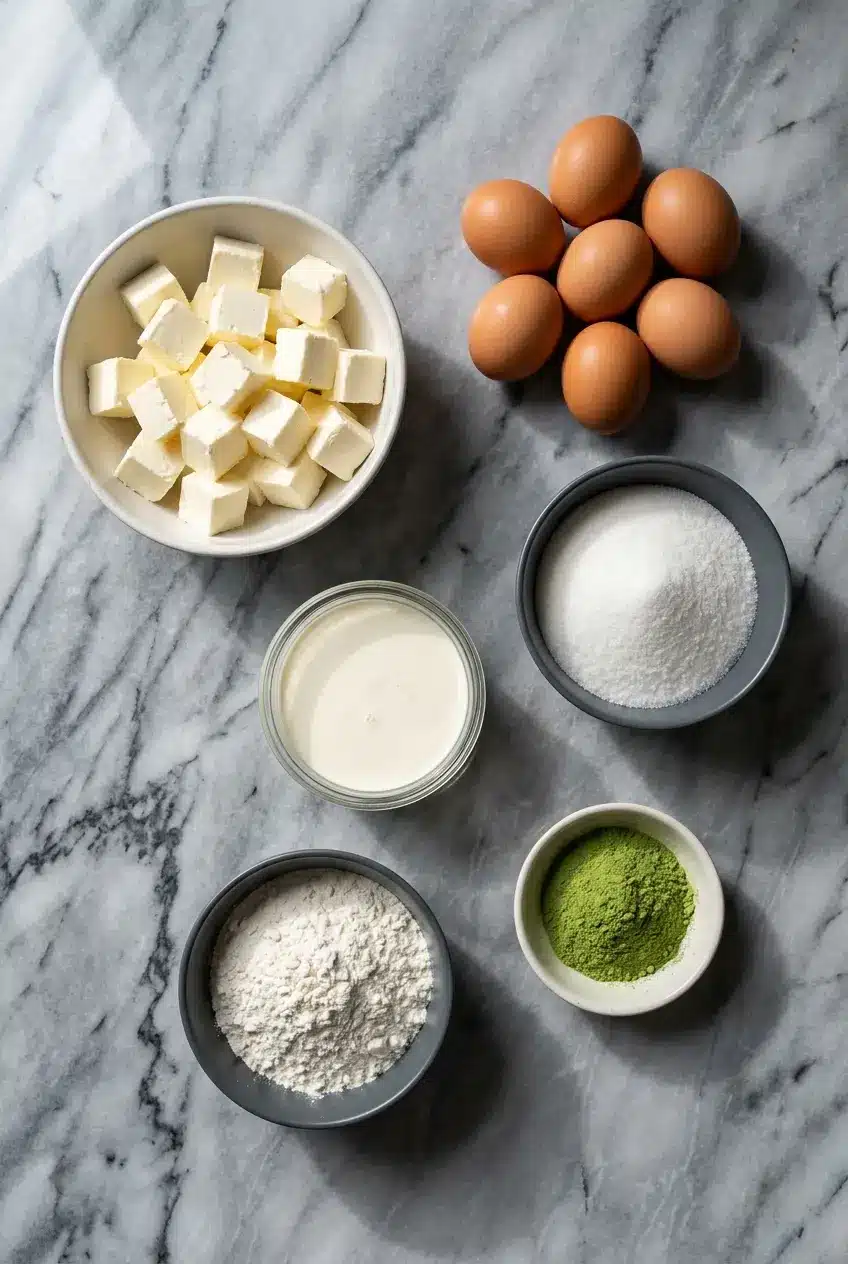
Each ingredient here plays a clear role, from the richness of the cream cheese to the pandan leaf powder that gives the cheesecake its color and signature fragrance.
Ingredients
- 6 eggs
- 900g cream cheese, chopped into cubes
- 300g white sugar
- 400g pouring cream
- 30g flour
- 1 1/2 tbsp pandan leaf powder
Ingredient Notes & Substitutions
Cream Cheese: Full-fat blocks are the way to go for this recipe. They give the cheesecake enough body to hold that iconic Basque shape while still setting into a soft, custardy center.
Pandan Forms: I use pandan leaf powder for steady color and reliable flavor in the batter, but fresh pandan leaves are the real secret if you want that rounded aroma. Pandan amaryllifolius has a naturally floral, grassy character that feels far more layered when infused into cream.
Pouring Cream: Choose a high-fat pouring cream or heavy cream for the silkiest finish. If you want a slight twist, replacing part of the cream with thick coconut cream adds a lovely tropical note, though the cheesecake will feel a touch richer.
Flour: A small amount of flour helps the filling set without making it heavy. For a gluten-free version, cornstarch or a good 1:1 gluten-free flour blend works well and keeps the texture smooth.
Eggs: Room temperature eggs mix more easily into the batter and help prevent little flecks of cream cheese from lingering. That matters in a recipe where the final texture should be glossy and nearly mousse-like.
How to make pandan basque cheesecake
Infuse and Prepare
- Before you start the batter, warm the 400g pouring cream with 3 to 4 bruised and knotted fresh pandan leaves in a small saucepan until it is just beginning to simmer. Take it off the heat, let the leaves steep for 15 minutes so the cream picks up their fragrant oils, then discard the leaves and cool the cream completely.
- Preheat your oven to 200°C. Line a 22cm springform tin with baking paper, making sure the paper rises 10cm above the rim so it can support the dramatic lift this crustless cheesecake gets in the oven.
Mix the Batter
- Add the eggs to your mixing bowl and beat with a hand mixer or stand mixer until smooth and fully blended. You are not looking for a foamy ribbon here, just an even, glossy base.
- Add the cubed cream cheese and beat until the mixture is silky and lump-free, stopping to scrape down the sides of the bowl whenever needed. The batter should look thick, pale, and completely smooth before you move on.
- Mix in the white sugar until it disappears into the batter and everything looks creamy and unified. Slowly pour in the cooled infused cream along with the pandan leaf powder, then mix until the color turns an even vibrant green with no streaks.
- Finish by adding the flour and mixing only until the batter is smooth. At this point, the mixture should look glossy and pourable, not airy or whipped.
Bake for That Signature Jiggle
Pour the batter into the prepared tin and tap the tin gently on the counter to knock out any large air bubbles. Bake for 60 minutes, until the top is deeply darkened and the center still wobbles noticeably when the pan is nudged, that lively jiggle is exactly what gives you the soft heart later.
Cool and Unmold
Let the cheesecake cool completely in the tin so it can settle gradually without cracking or collapsing too hard. Once fully cool, carefully release the springform ring, peel away the paper, and transfer the cake to a serving plate.
Secrets for the Perfect Pandan Jiggle

The sweet spot for a Basque-style center is around 150°F, or 65°C, in the middle of the cake. If you have an instant-read thermometer, it takes out the guesswork and helps you stop at custardy instead of drifting into firm and rubbery.
That nearly black top can worry first-time bakers, but this is where the magic lives. Much of that bold color comes from the Maillard reaction and caramelization, which create toasted, bittersweet notes on the surface while the inside stays creamy and delicate.
Room temperature ingredients are not a fussy extra, they are one of the real make-or-break details. When the cream cheese is soft, it blends into the eggs smoothly, and if you need a little help before starting, this guide on how to soften cream cheese makes it much easier to avoid a lumpy batter.
A Guide to Pandan: Juice, Paste, and Powder
Pandan amaryllifolius can show up in several forms, and each one behaves differently in baking. Fresh juice has bright flavor and beautiful color, but it also adds moisture, which can shift the texture of a cheesecake if you are not adjusting the formula.
Pandan paste is concentrated and convenient, but many brands lean artificial in both flavor and color. Extract is easy to find, though it often gives a one-note aroma that does not have the soft, grassy perfume fresh leaves bring.
Powder is my favorite for consistency because it adds color and flavor without thinning the batter. When you pair powder with a fresh leaf infusion, you get the best of both worlds, steady color in the filling and a more authentic fragrance in every bite.
The Science of the Basque Rise and Fall
A Basque cheesecake rises high in the oven because the eggs expand and the batter puffs almost like a loose souffle, then settles as it cools. That is why the tall parchment paper collar matters so much, it acts like a temporary wall and keeps the batter supported as it climbs.
High heat is also essential here. It quickly sets the outer structure, darkens the top, and leaves the interior creamy, which is very different from the low-and-slow method used for classic New York cheesecake.
The reason the center can stay so soft without becoming raw comes down to how egg proteins set into a tender gel. If you enjoy the technical side of baking, this explanation of egg protein coagulation does a great job showing why custards thicken gently at precise temperatures instead of all at once.
Pro Tips & Troubleshooting
Pro Tips
- Sift the pandan leaf powder with the flour before adding them to the bowl. It is a small step, but it prevents green clumps and gives the batter a more even color.
- Tap the filled tin on the counter before baking to release large bubbles. This helps the cheesecake rise and settle more evenly.
- Use room temperature ingredients whenever possible. Smooth batter means a silkier finished texture and a more polished slice.
- If your oven runs cool, an oven thermometer can make a real difference. Basque cheesecake depends on strong heat for that dark top and soft center.
Common Mistakes to Avoid
- Pulling the parchment away too early can tear the sides and make the cake slump before it has fully set. Let it cool completely first.
- Over-mixing after the flour goes in can build too much structure and leave you with a denser, more cake-like texture. Mix just until smooth.
- Using too short a parchment collar can cause overflow or misshapen sides. The 10cm extension is there for a reason.
- If your cheesecake is not browning on top, the oven may not be fully preheated or may be running below temperature. In this style of bake, strong top heat is part of the final flavor.
Serving & Storage

Serving Ideas
For the fullest pandan aroma, serve this cheesecake at room temperature, where the floral notes bloom and the texture feels airy and mousse-like. If you prefer a firmer, denser slice, chill it first and let the caramelized top contrast with that cool creamy middle.
A little salted gula melaka syrup over the top is beautiful here, and toasted coconut flakes add welcome crunch. When I want something bright alongside such a rich dessert, a light frozen treat like strawberry dole whip works nicely as a refreshing counterpoint after a generous slice.
Storage & Make-Ahead
This cheesecake should be refrigerated once it has cooled. Store it in an airtight container for up to 5 days, though I think the texture is at its finest within the first 48 hours, when the center is still especially creamy and delicate.
You can freeze it, well wrapped, for longer storage, but the custard-like center loses some of its luxurious softness after thawing. If you are baking ahead for guests, chilling it overnight in the fridge is the better move than freezing.

Pandan Basque Cheesecake

Equipment
- 22cm springform tin
- Baking paper
- Electric hand mixer or stand mixer
- Small saucepan
Ingredients
- 6 eggs
- 900 g cream cheese, chopped into cubes
- 300 g white sugar
- 400 g pouring cream
- 30 g flour
- 1 1/2 tbsp pandan leaf powder
Instructions
Infuse and Prepare
- In a small saucepan, warm the 400g pouring cream with 3 to 4 bruised and knotted fresh pandan leaves until it just begins to simmer. Remove from heat and let the leaves steep for 15 minutes. Discard the leaves and allow the cream to cool completely.
- Preheat your oven to 200°C. Line a 22cm springform tin with baking paper, ensuring the paper extends 10cm above the rim to support the cheesecake as it rises.
Mix the Batter
- Place the eggs in a mixing bowl and beat with a hand mixer or stand mixer until smooth and fully blended.
- Add the cubed cream cheese to the eggs. Beat until the mixture is completely silky and lump-free, scraping down the sides of the bowl as needed.
- Mix in the white sugar until unified. Slowly pour in the cooled infused cream and the pandan leaf powder, mixing until the batter is a vibrant green color with no streaks.
- Add the flour and mix only until the batter is smooth. The final mixture should be glossy and pourable.
Bake for That Signature Jiggle
- Pour the batter into the prepared tin and tap it gently on the counter to remove air bubbles. Bake for 60 minutes until the top is deeply darkened and the center still wobbles noticeably when nudged.
Cool and Unmold
- Let the cheesecake cool completely in the tin to allow it to settle without cracking. Once cool, release the springform ring, remove the paper, and transfer to a serving plate.
Notes
Nutrition
Conclusion
This is the kind of cheesecake that feels both dramatic and comforting, with that dark Basque top giving way to a creamy green center scented with real pandan. The fresh leaf infusion is the quiet little trick that makes the flavor taste fuller, softer, and more memorable.
If you have been curious about baking with pandan, this is a beautiful place to start. Once you get the feel for the jiggle, you can easily make it your own with a touch of coconut or a drizzle of palm sugar.