Skip to content
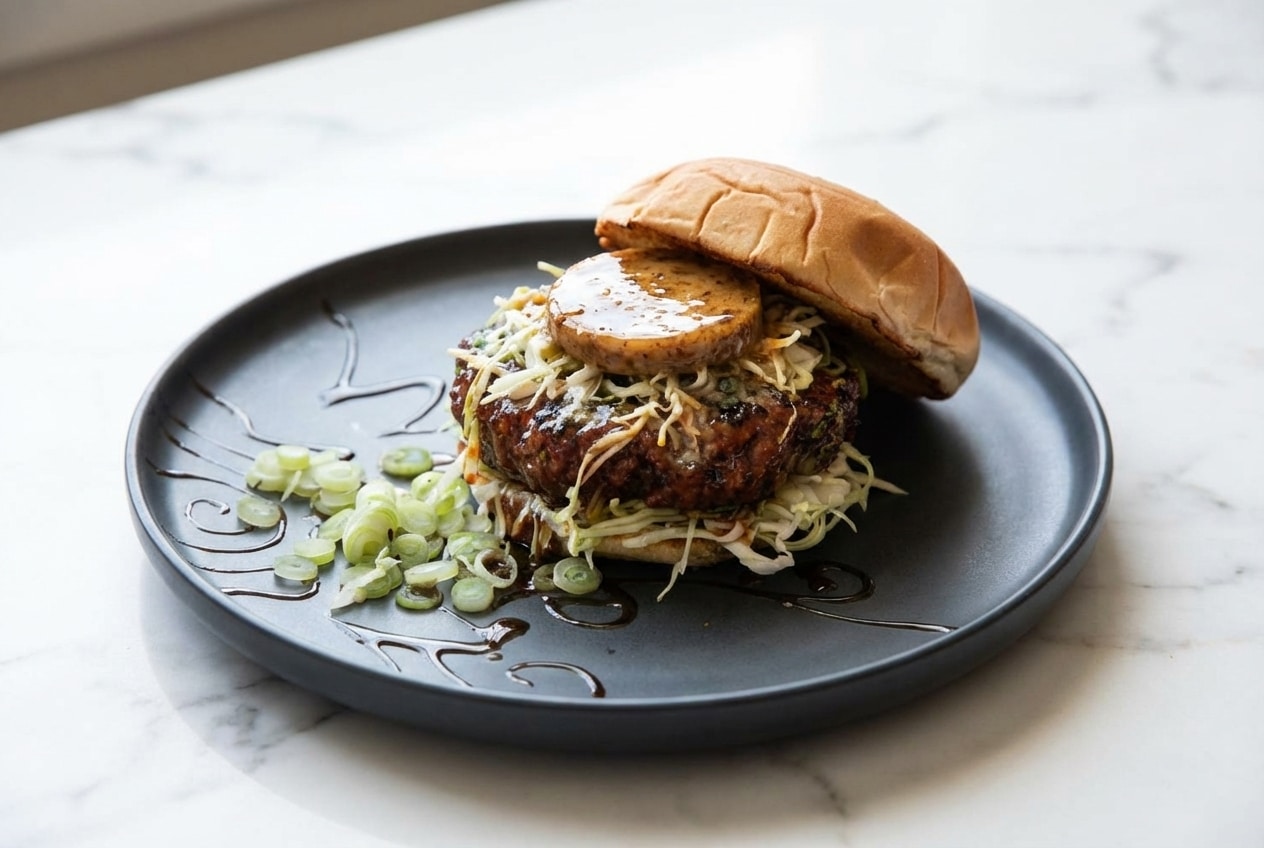
The first time I made a teriyaki burger for friends, I learned the hard way that sweet sauces love to burn, and lean-ish patties love to dry out. So I went back to my grill, my instant-read thermometer, and a few Japanese pantry staples until the whole thing finally clicked.
This version is for anyone who wants that glossy, sticky teriyaki glaze and a beefy bite that stays juicy to the center. The miso-marrow twist is the quiet “chef trick” that makes it feel like a diner splurge, but doable on a weeknight.
Why You’ll Love This Recipe
Juiciness from the inside out: I tuck a chilled miso-bone marrow butter disk into the patty, and it melts like internal basting. The result is plush, rich beef that stays moist even under a bold teriyaki glaze.
A glaze that turns mahogany, not bitter: The key is timing, I sear first for that Maillard reaction, then “lacquer” with sauce in thin layers. You get caramelization and shine without the scorched-sugar edge.
Texture that eats like a restaurant burger: Soft buns, Kewpie-style mayo, and crunchy green cabbage make every bite feel layered. Shichimi togarashi sneaks in a warm, citrusy heat that keeps the sweetness honest.
Ingredients and Substitutions

These are simple grocery-store ingredients, but each one has a job. The beef brings structure, the teriyaki brings gloss, and the cabbage plus mayo keep the bite crisp and creamy.
Ingredients
- 1 1/2 pounds fresh ground beef chuck (about 80% lean)
- Kosher salt
- 2 teaspoons shichimi togarashi (see note)
- 1 cup thinly sliced scallions
- 1 recipe Teriyaki Sauce (I strongly advise homemade over any store-bought brand)
- 4 soft hamburger buns
- 4 tablespoons mayonnaise, preferably Japanese-style
- 2 cups finely shredded green cabbage
Ingredient Notes & Substitutions
Ground beef chuck: An 80/20-style grind is the sweet spot for a juicy teriyaki burger, it browns deeply and stays tender. If you go leaner, the glaze can’t save that dry, crumbly bite.
Shichimi togarashi: This seven-spice blend gives a gentle heat plus a hint of citrus and sesame. If you are out, keep the same seasoning approach and add a small pinch of chili flakes, then finish with something bright like citrus zest at the table.
Teriyaki Sauce: I prefer a thicker, syrupy glaze so it clings and shines instead of running off. If your sauce is thin, reduce it briefly until it coats the back of a spoon, then cool it so it brushes on in glossy layers.
Mayonnaise, preferably Japanese-style: Japanese mayo is richer because it leans on yolks, and it tastes slightly more savory. Regular mayo works fine, but use a thicker swipe so it buffers the sweet soy glaze.
Soft hamburger buns: Brioche buns or potato rolls hold up best to a sticky teriyaki burger without collapsing. If your buns are delicate, toast them well so the cut sides go crisp and protective.
Green cabbage: Finely shredded cabbage beats lettuce here, it stays crunchy under heat and sauce. If you only have red cabbage, it’s still great, just slice it extra thin for a softer bite.
How to Make teriyaki burger
Shape, Season, and Set Up Your Scallions
- Gently divide the ground beef chuck into 4 equal portions, then form patties about 1/2 inch wider than your buns. Press a shallow dimple in the center of each one, that little dip keeps the burger from ballooning as it cooks.
- Season generously with Kosher salt and shichimi togarashi, coating both sides. Slide the patties into the refrigerator until you are ready to cook, cold meat holds its shape and browns more cleanly.
- Scatter the thinly sliced scallions evenly over a large plate or cutting board. This is your finishing “landing pad,” so the hot glaze grabs the scallions and perfumes the burger.
Preheat a Two-Zone Grill for Control
- Light one chimney full of charcoal. When the coals turn gray with ash, pour them onto one side of the charcoal grate, set the cooking grate in place, cover, and preheat for 5 minutes.
- For gas, set half the burners to the highest heat, cover, and preheat for 10 minutes. Whichever grill you use, clean the grates and oil them so the patties release easily.
Sear First, Then Lacquer with Teriyaki
- Place the burgers directly over the hot side, cover with vents open if using charcoal. Cook for 5 to 7 minutes total, turning occasionally, until the outside looks well-charred and the centers hit 110°F for medium-rare or 120°F for medium on an instant-read thermometer.
- Now brush both sides with teriyaki sauce, then keep cooking while flipping and brushing occasionally. You are building layers, the surface should look sticky and deep brown, and the centers should reach 120°F for medium-rare or 130°F for medium.
- Transfer the patties onto the scallion-covered plate, then brush with more sauce and flip, brushing again until the burgers are well glazed and coated with scallions. The heat will gently wilt the scallions and fuse them to the lacquer.
Toast and Build the Burger
- Toast the buns over the grill until browned and crisp on the cut sides. You want that toasty smell and a firm surface that won’t soak through.
- Spread mayonnaise on both top and bottom buns, then add half of the shredded cabbage to the bottom buns. Set the glazed burgers on top, brush with more teriyaki sauce, finish with the remaining cabbage, close the buns, and serve right away.
Mastering the Art of the Glazed Burger

Teriyaki burgers have a fun split personality. Hawaii’s “Banzai” diner style goes big, sometimes with grilled pineapple, while Japan’s Mos Burger approach leans into refined umami and neat, well-balanced portions.
This recipe bridges both worlds by treating teriyaki as a glaze, not a marinade. A marinade soaks inward, while a glaze is meant to cling and caramelize on the surface, giving you that iconic sticky bite.
Cultural Styles
If you want the Hawaiian lane, add a thick ring of grilled pineapple and a few red onion slices. If you want the Japanese lane, keep the build clean and let scallions, Kewpie mayo, and the glossy lacquer do the talking.
Air-Fryer Conversion
An air fryer can absolutely handle this, especially when grilling weather is rude. Air-fry the patties at 375°F for 8-10 minutes, then apply the teriyaki glaze only in the last 2 minutes so the sugars do not smoke and turn sharp.
Salvaging Store-Bought Sauce
If bottled teriyaki feels thin, a quick simmer helps it behave like a true glaze. Whisk in a cornstarch slurry, 1 tsp cornstarch to 1 tsp water, and cook until it coats the back of a spoon.
A small spoonful of hot honey can add thickness and gentle heat. I like that spicy-sweet nudge because it keeps the soy sauce notes lively.
Pro Tips & Troubleshooting

Pro Tips
- Flip more often during the early sear, it helps the burger cook evenly and keeps juices from being pushed up and out. I look for a steady browning without the surface drying or cracking.
- Save the glaze for the end, and brush in thin coats so it turns shiny instead of scorched. The smell should be sweet-savory and toasty, never acrid.
- Rest the patties for 3 minutes before building the buns. Those minutes let juices settle so your bottom bun stays intact.
- Handle the beef lightly when shaping, just enough to hold together. Overworked meat turns tight and bouncy, more like sausage than a tender burger.
Common Mistakes to Avoid
- Glazing too early, the sugar burns before the center is done, and that bitterness sticks. Sear first, then brush late, especially if your grill runs hot.
- Skipping the thermometer, teriyaki burgers are all about hitting the target temperature before the sauce goes on. An instant-read thermometer makes the timing feel effortless.
- Using watery sauce straight from the bottle, it slides off and never lacquers. A quick reduction or thickening makes it cling and shine.
- Building on untoasted buns, soft bread plus hot glaze turns soggy fast. Toast until the cut sides feel crisp to the touch.
Serving & Storage
Serving Ideas
Sweet potato fries are my usual partner here, their sweetness echoes the mirin and soy sauce vibe without competing. Pickled daikon, kimchi, or a quick tangy cucumber side also cuts the richness beautifully.
Something cool and crunchy like Asian cucumber salad fits the sweet-savory profile nicely. The fresh bite resets your palate between glossy, beefy mouthfuls.
After a rich burger, I like ending with mochi ice cream for a light finish. That chewy-cold contrast feels very at home next to teriyaki flavors.
Storage and Reheating
Keep glazed patties in an airtight container for up to 2 days. Store the cabbage and buns separately so everything stays crisp.
Reheat in a covered skillet over low heat with a splash of water. The steam softens the glaze and warms the center without turning the meat rubbery.

Juicy Teriyaki Burger With Miso-marrow Glaze

Equipment
- Grill (Charcoal or Gas)
- Instant-read thermometer
- Grill brush
Ingredients
- 1 1/2 pounds fresh ground beef chuck (about 80% lean)
- Kosher salt
- 2 teaspoons shichimi togarashi (see note)
- 1 cup thinly sliced scallions
- 1 recipe Teriyaki Sauce (I strongly advise homemade over any store-bought brand)
- 4 soft hamburger buns
- 4 tablespoons mayonnaise, preferably Japanese-style
- 2 cups finely shredded green cabbage
Instructions
Shape, Season, and Set Up Your Scallions
- Gently divide the ground beef chuck into 4 equal portions, then form patties about 1/2 inch wider than your buns. Press a shallow dimple in the center of each one to keep the burger from ballooning as it cooks.
- Season generously with Kosher salt and shichimi togarashi, coating both sides. Slide the patties into the refrigerator until you are ready to cook.
- Scatter the thinly sliced scallions evenly over a large plate or cutting board to serve as your finishing landing pad.
Preheat a Two-Zone Grill for Control
- Light one chimney full of charcoal and pour them onto one side of the charcoal grate once gray, or set half of your gas burners to the highest heat. Preheat for 5 to 10 minutes, then clean and oil the grates.
Sear First, Then Lacquer with Teriyaki
- Place the burgers directly over the hot side of the grill. Cook for 5 to 7 minutes total, turning occasionally, until the centers hit 110.F for medium-rare or 120.F for medium on an instant-read thermometer.
- Brush both sides with teriyaki sauce and continue cooking while flipping and brushing occasionally to build sticky layers. Cook until the centers reach 120.F for medium-rare or 130.F for medium.
- Transfer the patties onto the scallion-covered plate. Brush with more sauce and flip until the burgers are well glazed and coated with scallions.
Toast and Build the Burger
- Toast the buns over the grill until browned and crisp on the cut sides.
- Spread mayonnaise on both top and bottom buns. Add half of the shredded cabbage to the bottom buns, set the glazed burgers on top, and brush with more teriyaki sauce.
- Finish with the remaining cabbage, close the buns, and let the patties rest for 3 minutes before serving.
Notes
Nutrition
Conclusion
A great teriyaki burger is really about two things, smart glaze timing and enough rich fat to stay juicy. Once you nail the late-brush lacquer and build with crunchy cabbage and mayo, the whole burger tastes intentional.
If you like playing with flavors, a little extra shichimi heat or a pineapple slice changes the mood fast. Keep the method, riff on the toppings, and you’ll have a signature burger that people request by name.
Frequently Asked Questions
Why does my teriyaki sauce taste bitter after grilling?
That bitterness is almost always burnt sugar. Sear the burger first, then brush on teriyaki near the end and keep flipping and brushing in thin layers so it caramelizes without charring.
Should I put the sauce inside the meat or just on top?
For a teriyaki burger, the iconic flavor is on the outside as a glaze. Internal seasoning is fine, but the glossy crust comes from brushing, and the inside stays juicy from using 80/20 beef and not overcooking.
What is the internal temperature for a safe but juicy burger?
This method targets 110°F for medium-rare or 120°F for medium during the sear, then 120°F or 130°F after glazing. Many home cooks aim for 160°F for fully cooked beef, so choose what you are comfortable with and use an instant-read thermometer for confidence.
How do I make my own Japanese-style cabbage slaw?
Keep it simple so it stays crunchy, toss shredded cabbage with a splash of rice vinegar, a drop of toasted sesame oil, and a pinch of salt, then let it sit 10 minutes. If you like a more “built” side, a structured cabbage slaw can add extra snap and color.
What is Japanese-style mayonnaise and why does it matter?
Japanese mayo, like Kewpie, is usually made with yolks, so it tastes richer and more savory than standard mayo. That extra umami balances the sweetness of teriyaki glaze and makes the burger feel more complete.