Skip to content
In my kitchen, tomato basil soup is the kind of comfort that fixes a rough day fast, the moment that first spoonful hits, silky, warm, and bright. When tomatoes are good, it tastes like late summer. When they are not, a few smart techniques can still make them sing.
This version leans into deep savoriness with a roasted-garlic backbone and a quiet umami trick I learned after years of tinkering. It is perfect for a quick lunch, a cozy dinner with grilled cheese, or a “let’s use up those tomatoes” moment that still feels a little fancy.
Why You’ll Love This Recipe
Umami that tastes slow-simmered: Instead of relying on just salt, I build savory depth the way bistros do, and that broth tastes rounded and “meaty” even with vegetable broth.
Roasted garlic sweetness: Roasting turns sharp garlic mellow and buttery, and it softens the acidity of Roma tomatoes without needing a lot of dairy.
Big flavor from caramelization: That gentle browning in the pot, classic mirepoix energy, gives the soup a deeper, almost roasted edge that plain simmering never achieves.
Silky texture, your way: With an immersion blender or a countertop blender, you control the finish, from rustic to velvet-smooth, while fresh basil stays bright and herbaceous.
Ingredients and Substitutions

These ingredients keep the soup clean and classic, tomatoes for body, basil for perfume, and a little balsamic vinegar to sharpen the edges in the best way.
Ingredients
- 2½ pounds roma tomatoes, halved
- ¼ cup extra-virgin olive oil
- Sea salt and freshly ground black pepper
- 1 medium yellow onion, chopped
- ⅓ cup chopped carrots
- 4 garlic cloves, chopped
- 3 cups vegetable broth
- 1 tablespoon balsamic vinegar
- 1 teaspoon fresh thyme leaves
- 1 loosely packed cup fresh basil leaves, plus more for garnish
Ingredient Notes & Substitutions
Roma tomatoes: These are my go-to because they are fleshy and less watery, which naturally gives you a thicker soup. If you are cooking in winter, high-quality San Marzano tomatoes (canned) will keep the flavor sweet and concentrated.
Fresh basil: Use leaves that smell peppery and sweet when you rub them, and save a small handful for garnish. I add basil at the very end because heat dulls its green, floral punch fast.
Vegetable broth: Choose one you would happily sip, because it is the soup’s backbone. If you need a low-sodium approach, use a low-sodium broth and lean on good pepper and basil for lift.
Carrots and onion: This duo is the quiet “creaminess” trick, carrots bring natural sweetness and body, onion brings depth. Let them go soft and just a bit golden so the soup tastes rounded, not raw.
Heavy cream: It is not required, but a small splash at the end can push this toward bisque territory. If you add it, keep the heat gentle so the dairy stays smooth.
How to Make tomato basil soup
Roast the tomatoes for concentrated flavor
Heat your oven to 350°F and line a large baking sheet with parchment paper. Arrange the tomatoes cut side up, drizzle with 2 tablespoons of the olive oil, and season with sea salt and black pepper, then roast for 1 hour until the edges start to shrivel while the centers still look juicy.
Build the savory base on the stove
- Warm the remaining 2 tablespoons olive oil in a large pot over medium heat. Add the chopped onion, carrots, and chopped garlic, then sprinkle in ½ teaspoon salt and stir so everything glistens.
- Cook for about 8 minutes, stirring now and then, until the vegetables are soft and fragrant and you see a little golden color around the edges. That gentle caramelization is where the “restaurant” flavor begins.
Simmer, blend, then finish with basil
- Add the roasted tomatoes to the pot, then pour in the vegetable broth, balsamic vinegar, and thyme leaves. Bring it to a gentle simmer and keep it there for 20 minutes so the flavors meld and the kitchen smells like a little trattoria.
- Let the soup cool slightly, then blend until smooth, working in batches if needed. When it looks glossy and unified, add the basil and pulse just until the green flecks disappear into the red.
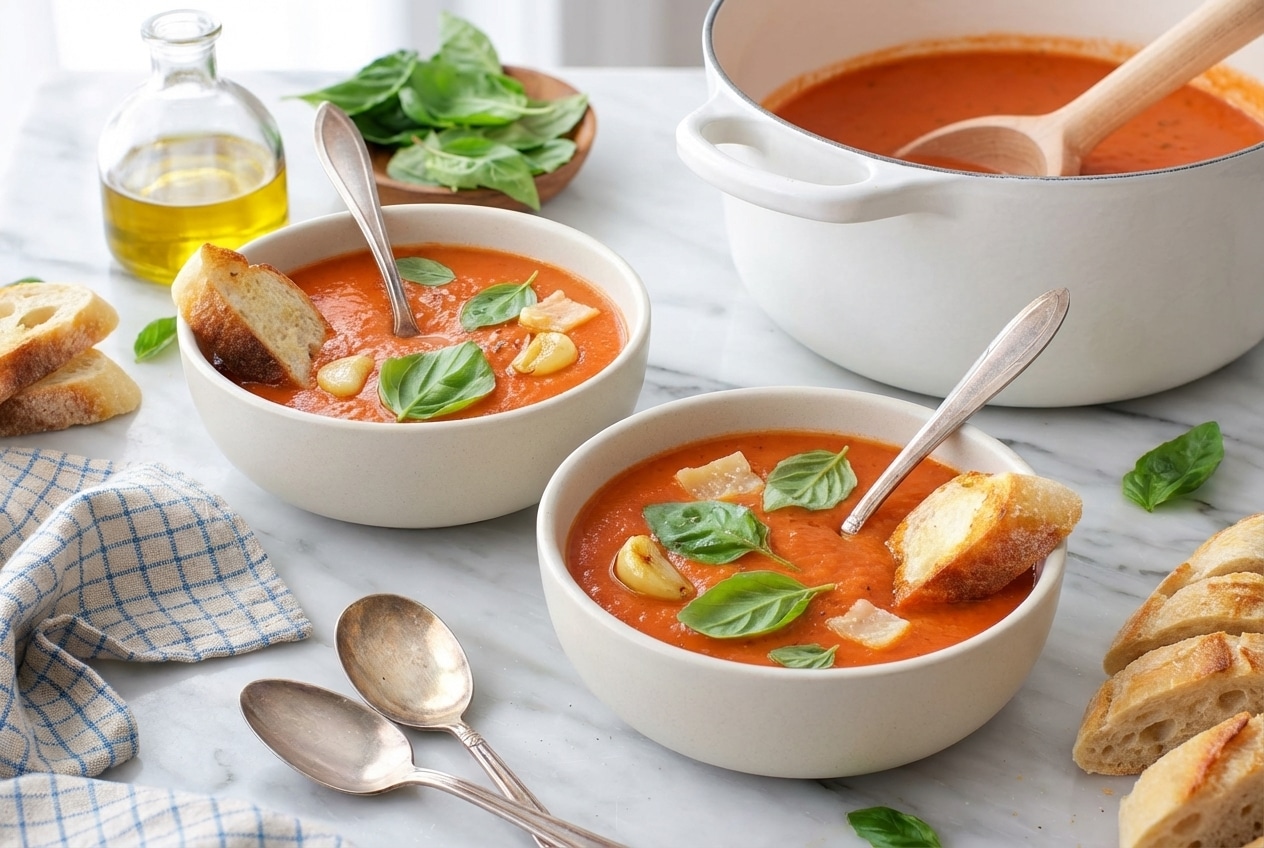
- Taste and season with more salt and pepper as needed, then ladle into bowls and top with fresh basil leaves. The finished aroma should feel tomato-sweet, herb-bright, and deeply savory.
Secrets for a Restaurant-Quality Finish

If tomato skins bother you, the little “X” trick is worth it. Score a shallow X on the bottom of each tomato, dip them into boiling water for 30 seconds, then slip off the skins once cool enough to handle, and roast as usual.
For winter cooking, canned San Marzano tomatoes are my favorite swap because they are thicker and less seedy. I look for a balanced, rich aroma when the can opens, not sharp or tinny, and I keep the simmer gentle so the flavor stays sweet.
Orange soup usually means your blender whipped air into the puree. Let it rest, then simmer on low for 5 minutes, and that deeper red color usually returns as the bubbles relax.
Pro Tips & Troubleshooting
Pro Tips
- Season in layers, salt the tomatoes before roasting, then salt the vegetables while they soften.
- Keep the simmer gentle, boiling can flatten the tomato flavor and turn basil muddy.
- For the smoothest texture, blend thoroughly, then pulse basil briefly at the end.
- Golden edges on the onion and carrots matter, caramelization adds sweetness without sugar.
When I am craving that savory roasted depth, I lean on the same logic used in roasted cabbage steaks. Browning plus parmesan-style savoriness creates that irresistible “just one more bite” effect.
Common Mistakes to Avoid
- Boiling after adding heavy cream, it can split or taste dull.
- Using watery slicing tomatoes, they can make the soup thin and bland.
- Adding basil too early, it turns dark and loses its fresh perfume.
- Blending on high too long without resting, it can lighten the color.
Serving & Storage

Serving Ideas
I love this with the classic sourdough grilled cheese situation, plenty of crunch for dipping. A drizzle of olive oil or a little balsamic glaze on top makes the bowl taste “finished” with almost no effort.
For a lighter, high-protein dipper, cottage cheese flatbread is a smart pairing. It stays sturdy against a silky soup and adds extra staying power.
Storage & Make-Ahead
Fridge: Store in an airtight container for up to 4 days, and reheat gently so the tomato flavor stays bright. If you do add heavy cream, warm it slowly and avoid a hard boil.
Freezing: Freeze for up to 3 months, and thaw overnight in the fridge for best texture. If you plan a creamy version, freeze the base first, then add cream after reheating so it stays smooth.

Roasted Tomato Basil Soup

Equipment
- Baking sheet
- Parchment paper
- Large pot
- Immersion blender
Ingredients
- 2½ pounds roma tomatoes, halved
- ¼ cup extra-virgin olive oil
- Sea salt and freshly ground black pepper
- 1 medium yellow onion, chopped
- ⅓ cup chopped carrots
- 4 garlic cloves, chopped
- 3 cups vegetable broth
- 1 tablespoon balsamic vinegar
- 1 teaspoon fresh thyme leaves
- 1 cup fresh basil leaves, plus more for garnish loosely packed
Instructions
Roast the tomatoes for concentrated flavor
- Preheat your oven to 350°F and line a large baking sheet with parchment paper.
- Arrange the halved tomatoes cut side up on the sheet. Drizzle with 2 tablespoons of olive oil and season generously with sea salt and black pepper.
- Roast for 1 hour until the edges shrivel and the centers are concentrated and juicy.
Build the savory base on the stove
- Heat the remaining 2 tablespoons of olive oil in a large pot over medium heat. Add the onion, carrots, and garlic with a pinch of salt.
- Cook for 8 minutes, stirring occasionally, until the vegetables are soft and develop a light golden caramelization.
Simmer, blend, then finish with basil
- Stir the roasted tomatoes into the pot along with the vegetable broth, balsamic vinegar, and thyme. Bring to a gentle simmer.
- Maintain the simmer for 20 minutes to allow the flavors to meld together.
- Allow the soup to cool slightly. Use an immersion blender to puree until smooth and glossy. Add the basil leaves and pulse briefly so small green flecks remain.
- Adjust seasoning with salt and pepper. Ladle into bowls and garnish with extra basil.
Notes
Nutrition
Conclusion
This is the tomato basil soup I make when I want comfort with a little polish, concentrated tomatoes, a savory backbone, and that basil finish that smells like a garden. Play with the texture, keep the simmer gentle, and do not rush the blending.
If cozy soups are your love language, a rich chicken soup recipe makes a perfect next pot for the week. I keep both in rotation when the weather turns crisp.
Frequently Asked Questions
Should I remove the tomato skins?
It’s optional. Roasting softens skins enough to blend smoothly, but if you want a perfectly silky finish, peel them after a quick blanch or pass the blended soup through a food mill.
How do I fix a soup that is too acidic?
A teaspoon of honey or sugar can round out sharpness, and a small splash of heavy cream can soften the edges. A sweet-heat option like this hot honey recipe can balance acidity while adding a gentle kick.
What is the best tomato for soup?
Roma tomatoes are ideal because they have more flesh and less water. If you want extra staying power, a protein tomato soup variation can boost satiety without changing the cozy vibe.
Can I freeze tomato soup?
Yes, it freezes beautifully for up to 3 months. If you add heavy cream, freeze the base first and stir in the cream only after reheating to avoid graininess.
Why did my soup turn orange?
This usually happens when air gets whipped in during blending. Let it sit for a few minutes, then warm it gently on low heat and the color should deepen back toward red.
Is tomato basil soup gluten-free?
Yes, this soup is naturally a gluten-free soup as written, since it contains no flour or pasta. Just confirm your vegetable broth is labeled gluten-free if you are sensitive.
Kitchen Notes on Flavor Science and Nutrition
Roasting is not just for “more flavor,” it is chemistry you can taste. Browning on the pan is part of the Maillard reaction, which helps create those deeper, savory notes that make simple vegetables feel complex.
That savory depth also explains why parmesan works like magic, even in small amounts. Parmesan is rich in natural glutamates, which is why a rind (if you use one) can make a pot of soup taste quietly “slow cooked.”
Tomatoes are also one of those ingredients that do well with heat. Research on cooked tomatoes points to increasing total antioxidant activity, which is one more nice reason to enjoy them simmered and blended.
If you are swapping in canned tomatoes, the soup’s tang can vary by brand. Tomatoes sit near the line of natural acidity, so tasting and balancing at the end, with salt, a touch of sweetness, or a splash of cream, is simply good cooking.